Quantcast
Channel: Thomas Maier Books
Viewing all 297 articles
Browse latest View live

Best TV of the Year? NYTimes, Variety, Rolling Stone and Others Call "Masters of Sex" one of TV's top programs in 2014: "Never Plays It Safe", says RS, a fitting tribute.

$
0
0

The New York Times,Variety, Rolling Stone include "MASTERS OF SEX" on their best of the year lists. In talking about the "Fight" episode from Season 2 this year, Rolling Stone said:
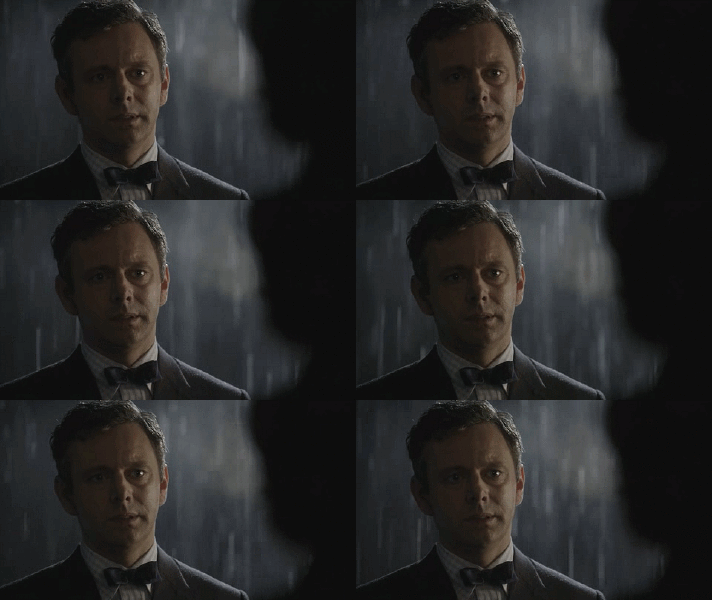
"The episode "Fight" sums up everything that makes Masters of Sex so devastating. The 1950s sex researchers — played by Michael Sheen and Lizzy Caplan — sneak off to a posh hotel, under fake names, for a little horizontal (and vertical) (plus diagonal) lab work. Strictly business, all in the name of science. But all the bedroom role-playing opens up the NSFW feelings they spend the rest of their lives ignoring. They expose the flesh under their bathrobes — as well as way too much of the pain under their flesh. An hour of erotic agony, from a drama that never plays it safe.

HARDBALL's Chris Matthews Reviews and Praises WHEN LIONS ROAR: The Churchills and the Kennedys; Chartwell Bulletin Offers Interview with Author

$
0
0
There's a terrific review of WHEN LIONS ROAR: The Churchills and the Kennedys" contained in The Churchill Centre's latest newsletter, The Chartwell Bulletin, which is written by television Hardball's Chris Matthews. You can read it all here on their website and you can also take a peek at my interview with Chris Matthews on Hardball recently and Chris's televised editorial about Churchill and Kennedy citing my book. (Many thanks to Chris, an author and journalist I've long admired). 
Along with the review, the Churchill Centre also offered this interview with me about the new book.
Hope you enjoy!

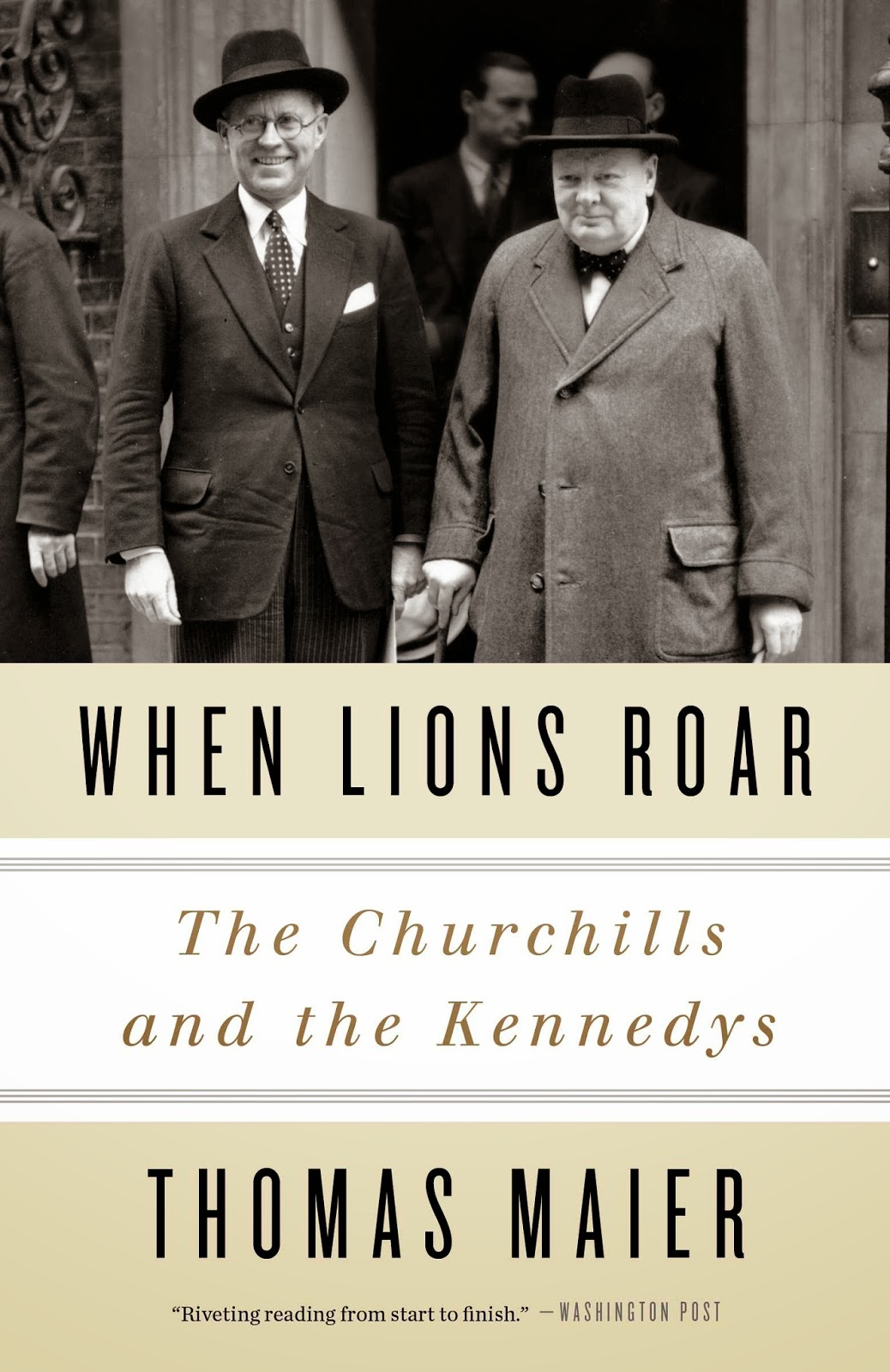
When_Lions_Roar_DJAuthor of When Lions Roar: The Churchills and The Kennedys
Discusses His Book With The Chartwell Bulletin


Thomas Maier is a best-selling journalist and biographer whose work includes the book that inspired the hit Showtime series Masters of Sex as well as The Kennedys: America's Emerald Kings. He recently spoke about his newest book, which returns to the story of the Kennedys and adds Winston Churchill and his family, at Chartwell Booksellers. To watch the video, please CLICK HERE. Additionally, Maier took the time to speak with theChartwell Bulletin about When Lions Roar: The Churchill & The Kennedys. This interview follows below:

CB: Tom, welcome to Chartwell Bulletin. You began your career as a journalist; tell us how you made the transition to biography and about some of the subjects that first interested you.

TM: All five of my books are about America in the 20th Century, even this one about the families of JFK and Winston Churchill, (who, in a sense, was half-American because his mother was born in Brooklyn). Many of the best biographies and histories of this generation have been written by those who began in the newsroom rather than the academy. Pulitzer-winner Robert Caro (author of biographies on LBJ and Robert Moses) began at my newspaper Newsday in New York and this year another former Newsday colleague Dan Fagin won the Pulitzer for General Non-Fiction. The skills of an investigative reporter are invaluable in coming up with new historic discoveries and writing a vivid, ground-breaking narrative.

CB: You first wrote about the Kennedy family in your 2003 book, The Kennedy's: America's Emerald Kings. What led to you to them as a subject and what did you find of particular interest in this very well-documented American family.

TM: So many Kennedy histories are caught up in "Camelot" imagery and ignore the impact of the family's Irish Catholic immigrant background on their personal and public lives. If you view JFK as the first US president from a minority background (his Catholicism was the top issue of the 1960 presidential campaign), then looking at his roots seems vital and proved ground-breaking for my first book about the Kennedys. The heart of this new book is the Kennedys' time in London leading up to World War II and how Winston Churchill had a lasting impact on President Kennedy and the US during the Cold War, becoming the successor to the British Empire in today's international arena.

CB: How did you become interested in the Churchill family and in the Churchill/Kennedy relationship? What were your goals when you started your research and what sources did you find interesting and useful?

TM: Both Winston and JFK were warriors, historians and superb statesmen who understood the power of words. Comparing and contrasting their remarkable dynasties provided great insight into the "special relationship" between America and Great Britain and was irresistible once I realized no one had ever written such a saga. It was a story hidden in plain sight, waiting to be told. Overall, my book contains 1783 separate footnotes, much of it from the Churchill archives, JFK and FDR presidential libraries, and collections at the Library of Congress and National Archives in London, where I read the fascinating papers of Lord Beaverbrook, one of many friends of both families.

CB: What was the most revealing part of your research? Did you find things that surprised you?

TM: Many of the biggest disclosures in When Lions Roar come from previously-unpublished documents, including those about the secretive 1933 British liquor deal involving Joe Kennedy, Churchill and FDR's oldest son, Jimmy. Documents about this business deal—and unknown letters from mutual friends such as Americans Bernard Baruch and Kay Halle—show that the Kennedys and Churchill were friendly before they became antagonists over America's entry into World War II, and ultimately how the younger generation became friends again during the 1960s Kennedy presidency era. This arc rewrites the conventional wisdom, in which some claimed the Churchills and Kennedys always disliked each other. This just wasn't so and the documents quoted in my book make their story much more complex and heart-rendering.

CB: Given their legacies today, do you think the Churchills and the Kennedys defined and used "power" in similar or different ways?

TM: Like a modern-day War and Peace, I wanted to write a big narrative history that captures the extraordinary lives of the Churchills and the Kennedys, with their ambitions, desires and legacy of greatness. Both Winston Churchill and JFK understood how great speeches, a sense of history, and intangibles like courage and wit were so important to their legacy. From a long view, When Lions Roar traces how power was transferred from the old British Empire to today's U.S. sphere of influence, and that JFK was perhaps the most effective heir to Churchill's legacy as a champion of freedom.

CB: Why do you think Winston Churchill and Joseph Kennedy, as well as their sons Randolph and Joe Jr., had such opposing views on the rise of Nazi Germany in the 1930's? How did this affect their relationship, both professionally and personally?

TM: War for the Churchills meant defending their beloved England—and all the liberties and human dignity that Hitler threatened—whereas war for the Kennedys, like most Americans during those isolationist times, meant only death and destruction in a faraway land and senseless loss of young lives. Eventually Joe lost his oldest namesake son and the war nearly killed Jack Kennedy too. It is so tragic to consider, especially given the many mutual friends these two families shared in the 1930s, how the evil of Hitler's Nazi empire tore them apart for many years. But how the young Kennedys and Churchill reconciled during the early 1960s and became close friends is one of the most surprising aspects of my book.

CB:How would you compare the marriages of Winston and Clementine Churchill from Joseph and Rose Kennedy? How did these characteristics help or hinder the two men?

TM: Both Winston and Clementine came from families with a lot of tumult yet their marriage maintained a rock-steady fidelity to each other and Winston's dream of becoming prime minister someday. Joe and Rose's marriage was upset by his infidelities, but they took great pride in their "family enterprise" with nine children. Joe Kennedy's failure as a politician, ironically, allowed him to pour his energies into his sons' public lives in a way that Winston never did with his son Randolph.

CB: The Churchill and Kennedy sagas contain many interesting side characters who weave in and out of both their own and their family's lives. Were there some you found especially interesting?

TM: The supporting cast of characters in this story who were friends with both families is truly extraordinary—from Lord Beaverbrook, FDR and Bernard Baruch to Aristotle Onassis, Evelyn Waugh and Pamela Churchill. In particular, I'd like to think that my book gives serious consideration to independent-minded women such as Clare Boothe Luce, Kick Kennedy, Pulitzer winner Margaret Coit, Kay Halle and Pamela Churchill, who were too often dismissed in previous books about these two families.

CB: Both Joe Kennedy as an individual and his record as Ambassador to the Court of St. James have been widely disparaged. Did Kennedy have strengths as an ambassador and what do you think ultimately lead to his failure in that position?

TM: Joe Kennedy's desire for respectability in London was understandable, especially in the context of his Irish Catholic roots and his family's ambitions for higher office. But Joe's celebrated selection by FDR was done for a host of bad reasons, as my book explains. Joe's outspokenness was often wrong-headed, as his son Jack eventually realized. For more than ever before, this book closely examines the spy scandal at the US Embassy in London during World War II that would haunt the Kennedys for years to come. (One of the first things new Attorney General Robert Kennedy asked of FBI chieftain J. Edgar Hoover was the file on Tyler Kent, the convicted spy from his father's tenure).

CB: From having examined the lives of both families in detail, would you agree that being the child of a great or famous man is both an advantage as well as a burden? How to you think this affected and was reflected in the lives of the children in both families?

TM: Yes, the dynamic between fathers and sons—both the burdens and the advantages—is a big theme in this book. Both Joe Kennedy Jr. and Randolph Churchill were particularly impacted by their famous fathers and the expectations surrounding them. In a sense, Jack Kennedy, like Winston Churchill, benefitted from lowered parental expectations when they were young, allowing them to find their own voices. My book begins in 1930 when both Winston and Jack were at low moments in their lives and I hope readers enjoy learning how they achieved their respective greatness.

CB: Now that we are approaching the 50th anniversary of Churchill's death, what would Joe Kennedy think about his iconic status today?

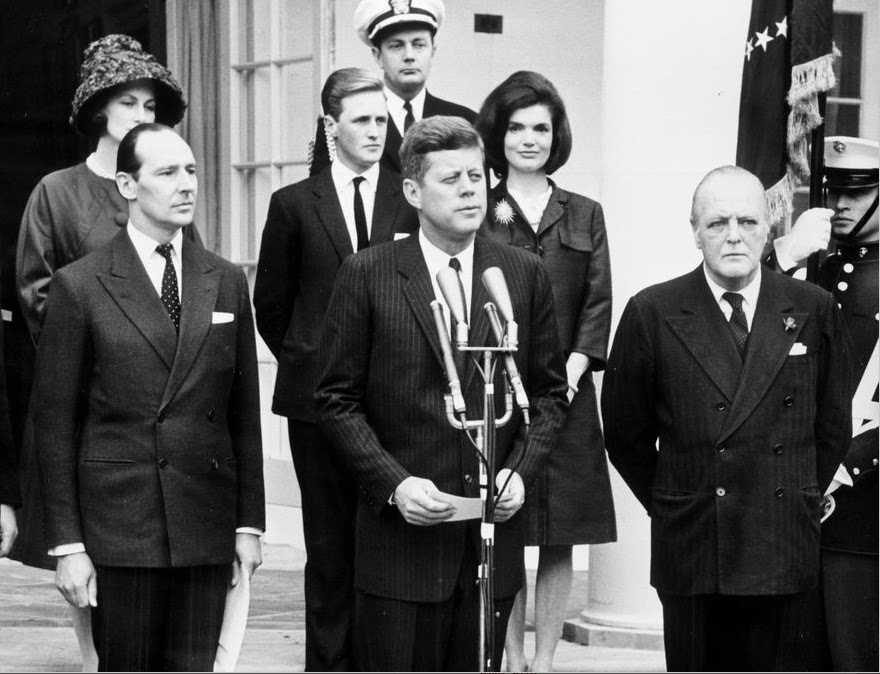
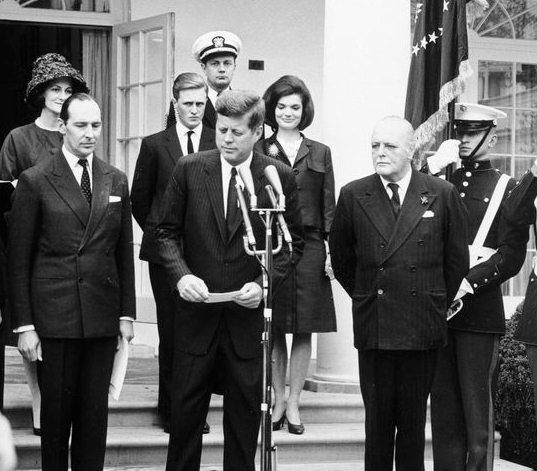
TM: One of the most memorable scenes in my book is from April 1963, when a crippled Joe Kennedy, silent from a stroke, looked out a second-floor White House window as his son, President John F. Kennedy, bestowed honorary U.S. citizenship upon Winston Churchill in recognition for all he meant to America during World War II and the fight against Nazi tyranny. For a long time, Joe Kennedy held a great grudge against Winston—responsible in his eyes for bringing America into the war, for the death of so many young people including his son and son-in-law. But later in life, Joe apparently visited with Churchill, arranged by their mutual friend Lord Beaverbrook, and agreed with the need for a strong defense against the Soviet Union during the Cold War. Ultimately, I can't help but believe that Joe, sitting silently in that wheelchair in 1963, would wind up agreeing with the judgment of his son Jack who patterned so much of his leadership skills upon Winston's lasting example.Kennedy_Churchill_ceremonyHonorary Citizenship Ceremony

To learn more about Winston Churchill, please visit www.winstonchurchill.org.

A Wartime White House Christmas With Churchill: Wall Street Journal Op-Ed from WHEN LIONS ROAR: The Churchills and The Kennedys

$
0
0
The Wall Street Journal is running this excerpt from WHEN LIONS ROAR: The Churchills and The Kennedys, about Churchill spending Christmas 1941 at the White House, planning war strategy with President Roosevelt. Please do pick up the book for your favorite reader!


EXCERPT Adapted from "WHEN LIONS ROAR": Long Before Obama’s Cuba Deal, The Vatican Offered Secret Diplomacy To FDR with a Kennedy’s Help

$
0
0

Adapted from "WHEN LIONS ROAR": Long Before Obama’s Cuba Deal, The Vatican Offered Secret Diplomacy To FDR with a Kennedy’s Help.


By Thomas Maier

  Thomas Maier is the author of “When Lions Roar: The Churchills and the Kennedys” (Crown).
 
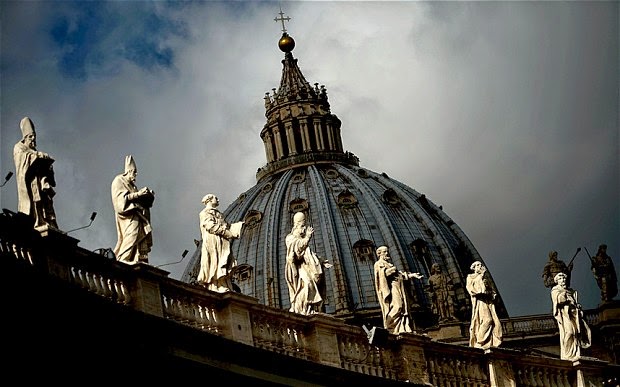
Many were surprised by the Vatican’s role in secret displomatic meetings that led up to the recent ground-breaking American overture to Cuba. But President Obama wasn’t the first White House occupant offered such help from Rome.
     Arguably the first president to recognize the Vatican’s influence was Franklin D. Roosevelt, at the urging of his ambassdador in Great Britain, Joseph P. Kennedy -- the father of future president John F. Kennedy.
      In 1939, the world’s busiest and most complex spy center wasn’t found in London or Washington, but rather in Vatican City, the 110-acre, postage-stamp-size home to the Roman Catholic Church, buzzing with rumors of the impending World War II. Hugh Wilson, the departing U.S. ambassador in Berlin, called the Vatican “the best information service in Europe.” The Vatican had listening posts in virtually every nation, with its mix of concordats and papal nuncios keeping the Church’s intelligence arm well informed. Hitler and the Nazis tried to place their own spies within the Church’s midst.
     For years, the American government seemed ignorant of the Vatican’s preeminence in espionage. But as war approached, Joe Kennedy pushed the Roosevelt administration to catch up.
      “Experiences in London had taught me the value of being in touch with Rome with its vast sources of intelligence reaching almost every corner of the world,” Kennedy later recalled in his unpublished memoir. “The information that the Vatican had with reference to conditions in Germany, in Austria and in Italy had peculiar value to us.”
Visiting FDR's house in Hyde Park in 1936 were
(from left) Count Enrico Galeazzi, Joseph P. Kennedy
and Vatican Secretary of State Cardinal Pacelli,
who became Pope Pius XII.
The Vatican connection proved an important political asset for the Kennedys in years to come. Joe used his discreet, largely unknown ties to Rome to buttress his position as one of America’s leading lay Catholics in public life, helped by his personal friendship with top clergy and his generous charitable donations as a wealthy man. His dream of seeing a Kennedy someday elected as the first Catholic president relied in part on the Church’s implicit support and on millions of ethnic Americans who identified with this barrier-breaking goal.
In the late 1930s, however, Kennedy’s main effort with the Vatican focused on gaining secret intelligence for the U.S. government. To underline his unique contributions, the London ambassador once again entrusted his cause with the president’s son, James Roosevelt. In April 1938, Kennedy sent young Roosevelt “a strictly confidential memorandum which I have received personally from Cardinal Pacelli,” then the Vatican’s secretary of state (and future Pope Pius XII), and asked Jimmy to pass it along to the president. A State Department document later said Pacelli’s memo outlined “the relations of the Vatican with various countries.”
How Joe Kennedy obtained the memo isn’t clear from documents (now housed in the JFK Presidential Library), though Jimmy portrayed it to his father as a small coup, a reminder of Joe’s unique contacts.
Cardinal Eugenio Pacelli, a thin-faced, austere man with thick eyeglasses, had been the Church’s chief diplomat since 1930, creating written treaties with several nations that allowed Catholics to practice their religion and run schools, hospitals, and church organizations without state interference. His 1933 concordat with Hitler’s Germany would later raise concerns about Pacelli’s view toward the Nazis. However, Winston Churchill, who had known Pacelli on a friendly basis since they first met in London in 1908, held a more nuanced view of the Vatican diplomat. Both Churchill and Pacelli shared a similar dread about the Bolsheviks in Russia. They feared communism would lead to the spread of godless dictatorships as threatening as the Nazis. In his memo to Kennedy, Pacelli said the Church felt “at times powerless and isolated in its daily struggle against all sorts of political excesses from the Bolsheviks to the new pagans arising from the ‘Aryan’ generations.”
Historically, many criticized Pacelli for a slowness or silence in confronting the Nazis, especially over their persecution of Jews both before and during World War II. But Pacelli’s 1938 memo makes clear his opposition to the Nazis and the embattled position Catholics faced with Hitler, despite the protections agreed upon with the concordat.
“No matter what pretexts are set forth by the German government, the real fact is that since the early time after the Concordat was signed a more or less open attitude against all clauses accepted in the Concordat was adopted by the German government,” Pacelli wrote in the translated version from Italian sent to the White House. “The Holy See has used all possible ways to protect the freedom of the Church and of the Catholics, keeping itself ever ready to do the best in order to avoid any more bitter conflict, and being always prompted by the desire of avoiding to make the situation more and more difficult.”
In his own note to Jimmy, Joe Kennedy pointed to portions of Pacelli’s memo that underlined the Vatican’s role as a beehive of intelligence and the strategic need for America to be more present in Rome. The future pope’s note read: “It will be very fine if you will convey to your Friend at home these personal private views of mine,” and he urged President Roosevelt to appoint a U.S. diplomat to the Vatican. Pacelli underlined that “in this very crucial moment of the European political life that the American Government is without a direct source of information from and a straight and intimate connection with the Vatican circles.”
For nearly a century, the American government had refused to send a diplomat to the Vatican, an opposition largely fueled by the nineteenth-century Know-Nothing movement and lingering anti-Catholic bigotry. Kennedy tried to convince Roosevelt to send an American envoy to the papal state, both as a practical improvement to U.S. intelligence abroad and good politics at home among many Catholic Democrats.
As the world inched toward war, this memo bolstered Kennedy’s argument for a better U.S. presence in Rome.

50th Anniversary of Winston Churchill's Passing is This Jan. 24: Read an Excerpt from "WHEN LIONS ROAR: The Churchills and the Kennedys" about Churchill's 1965 Funeral

$
0
0
This excerpt from "WHEN LIONS ROAR: The Churchills and the Kennedys" recounts the 1965 funeral for British Prime Minister Winston Churchill and some who paid tribute. 

“Mine eyes have seen the glory of the coming of the Lord.”
“The Battle Hymn of the Republic” filled St. Paul’s Cathedral during the state funeral for Winston Churchill, a tribute to the British Empire’s greatest defender and a lifelong admirer of the United States. “I want it in memory of my American mother,” Winston instructed about the song to be played after his death. Nearly one million mourners filled the London streets near the cathedral to pay their last respects to “Winnie,” the fatherly figure who shepherded them through war.
In one of the pews, former president Dwight Eisenhower sat with tears in his eyes, recalling the “soldier, statesman and leader whom two great countries were proud to honor as their own.” Part of the American entourage that joined Eisenhower at the funeral included Undersecretary of State Averell Harriman, the roving diplomat for both FDR and JFK (and a fill-in for President Lyndon Johnson, sick at home with the flu), and Kay Halle, the longtime friend of both families. “Poor Randolph Churchill called me from London today—all choked up about his father,” Halle wrote to Bobby Kennedy before she left for London. “What a titan is Sir Winston. An eternal flame he is too.”
Many commentators recalled Churchill’s honorary citizenship awarded by President Kennedy less than two years earlier and expressed sorrow that two of the twentieth century’s most revered leaders had passed from the scene. Watching on television from Washington, New York Times columnist James Reston said that Churchill’s funeral impacted the capital “more than any other event since the assassination of President Kennedy.” Winston’s remarkable example underlined “the imponderables of life,” Reston said, and “suggested that sentiment and history, that ideas and philosophy, are also powerful, and that the ‘special relationship’ between London and Washington was not merely a source of contention with Paris, but by itself something highly important.”
As Winston’s coffin floated down the Thames on its way to burial, his friends and family struggled to consider life without him. At the cathedral, Aristotle Onassis wept inconsolably—“sobbing like a baby” said one observer—at the loss of his friend and the most famous guest aboard his yacht. Yet Ari kept enough composure to insist that his former wife, Tina, now married to Winston’s cousin John Spencer-Churchill, the Eleventh Duke of Marlborough, be seated far away from him in the pews.
On the flight back to America, Kay Halle flew with Eisenhower and Averell Harriman and talked about old times. Both she and Pamela Hayward, the ex-wife of Randolph Churchill, had been invited by the former president to join him on the returning air force plane, with officers in white jackets serving caviar and champagne. Halle recalled how Winston always credited Eisenhower with putting the Allied cause in World War II above nationalism and his being the “architect” of victory against the Nazi war machine. Ike described the painting Winston gave him as a gift. He joked about the gray-haired appearance of their wartime British contemporaries, such as former prime minister Anthony Eden. “Averell, they look older than we do, though they’re younger,” Ike teased, putting aside his and Harriman’s past political differences. 
For most of the long flight, Harriman chatted with Pamela, his former lover, whom he’d not seen in nearly fifteen years. The last time they’d spoke, she resented Averell’s fitful warning about her reputation after divorcing Randolph, as if she needed a morality lecture from a rich married man who’d cheated on his own wife with her. But this trip to attend Winston’s funeral became a sentimental journey for Pamela. Now living in New York, she felt pleased to see her son, Winston, and new grandchild, and still be treated by Clementine as a member of the Churchill extended family. At age forty-four, Pamela hardly looked dowdy, appearing just as attractive, with her light auburn hair and come-hither eyes, as when she and Harriman conducted their affair while Randolph was away at war. “It had been a memorable moment in Harriman’s life, saying good-bye to the leader he idolized, and seeing the woman who still possessed him and talking with her for hours as they crossed the Atlantic,” described his biographer Rudy Abramson. Both Ave and Pamela were still married during that plane ride, but six years later, when both their spouses had died, they met again, at a Georgetown dinner party hosted by publisher Katharine Graham (whose other guests included Kay Halle). “Since we were both suddenly free and alone, it just seemed the most natural thing in the world to kind of get together again,” explained Pamela. One of the witnesses at their wedding was Ethel Kennedy. When young Winston told Clementine about his mother’s intentions to marry Harriman, Churchill’s widow seemed pleased. “My dear,” replied Clemmie, “it’s an old flame rekindled.”

Winston Churchill's Best Friend Hedged His Bets on Possible WWII Nazi Invasion; Lord Beaverbrook Secretly Asked American Amb. Joe Kennedy to Hold His Fortune If England Invaded By Nazis -- Read Excerpt from WHEN LIONS ROAR

$
0
0
    Unknown to Winston Churchill, his longtime friend, Lord Beaverbrook -- who proved a hero during the fateful 1940 Battle of Britain for ramping up fighter plane production-- secretly hedged his own bets on a Nazi invasion by asking another friend, U.S. ambassador Joseph Kennedy, to take care of his fortune if England was overrun by the Nazis
Lord Beaverbrook and Winston Churchill
     Here's an excerpt from "WHEN LIONS ROAR: The Churchills and the Kennedys" that tells the story, quoting Beaverbrook's previously unknown secret request to the controversial American ambassador.


     Kennedy’s affinity with Max Aitken, Lord Beaverbrook, the press lord and friend of Winston’s, formed perhaps the ambassador’s closest alliance in England. The American business tycoon liked Beaverbrook’s cunning and sharp instincts in all facets of life—enough so that Randolph Churchill’s friend writer Evelyn Waugh (who fashioned his novel Scoop on the bold and crafty press magnate), once quipped that he “had to believe in the Devil if only to account for the existence of Lord Beaverbrook.” If pushed, Kennedy agreed that Max could be “a treacherous little bastard.”
     For much of Kennedy’s time at the embassy, he and Beaverbrook agreed with Chamberlain’s appeasement policies, hoping their respective nations could somehow avoid war with the Axis powers. Churchill believed them both dangerously wrong. “There would be a great deal to be said for [Beaverbrook’s] policy of a pacific isolationism if we could arrange to have the United Kingdom towed out fifteen hundred miles into the Atlantic,” Winston chided. During their decades-long friendship (reaching back to the Other Club), Winston and Max had often differed on politics. After one of their frequent friendly arguments, Beaverbrook said of Churchill, “He is strictly honest and truthful to other people, down to the smallest detail of his life—yet he frequently deceives himself.”
    As British public opinion turned acrid about Kennedy’s defeatism, Beaverbrook seemed determined to stay in his good graces, just like another Churchill loyalist, Brendan Bracken. At an October 1939 gathering with reporters at Beaverbrook’s place, Bracken praised Kennedy: “He’s a great friend of England’s. Greatest ambassador we ever had.” While Bracken’s statement probably was just tactical, Beaverbrook’s fidelity to Kennedy seemed sincere. Even when England declared war against Germany, Beaverbrook ordered his newspapers not to turn on his American friend. Instructions from Lord Beaverbrook’s editors insisted that “Mr. Kennedy is not to be criticized in the columns of our papers, but that he is to receive favourable comment.”
     Like birds of a feather, Beaverbrook realized Joe wanted mostly to protect his investments—in his family and his own future. Between them, Kennedy offered a kind of shelter for the rich British lord, who was afraid of losing everything as well. When the Russians entered Poland in September 1939, Beaverbrook sounded “frightfully disturbed” in calling Kennedy at his weekend country home with the news. Max said he’d move his fortune to America in Joe’s care if necessary, according to Kennedy’s diary. “All my papers, my money, and everything else I own is yours to do as you wish with,” Beaverbrook told him, “There are only three men in England who know what the real situation is: first you—second, [British secretary of state for war, Leslie] Hore-Belisha—and third—(you may be surprised)—Winston Churchill.”

     For an imperiled British nation, Kennedy thought Beaverbrook would make a better leader, and so did the press lord himself. Joe’s cables praised Beaverbrook to the president—just as Beaverbrook said he did on Kennedy’s behalf when he visited the White House. “If he [Beaverbrook] had his way, he would like to turn over the British Empire to you to straighten out,” Joe enthused to Roosevelt.           During a trip to Washington around this time, Beaverbrook stopped in to see the president, and they chatted about Kennedy, Churchill, and the war. “Beaverbrook told me that in his conversations with you, you were most complimentary in discussing me and I am deeply grateful to you for this,” Kennedy wrote to FDR. “One’s influence on this Country is primarily dependent on how they think one stands with the President.”

     Needless to say, Beaverbook's fortune was never entrusted to Kennedy because the Nazis never invaded. 

Remembering Winston: When Churchill Met The Kennedys: Excerpt from WHEN LIONS ROAR

$
0
0

Winston Churchill passed away 50 years ago, January 24 1965. This excerpt from "WHEN LIONS ROAR: The Churchills and the Kennedys" recalls the first time the future British Prime Minister met with the soon-to-be famous American family.

On the distant hill before them, greatness awaited. Rose Kennedy could feel it in her bones. Her family’s long journey from America to England culminated at Chartwell Manor, the magisterial home of Winston Churchill, a celebrated British statesman-writer better known to Americans than the king, George V.
From their approaching automobile, the Kennedys could see the old Tudor-style building made of red brick perched high above a meadow, water gardens, and surrounding beech trees. As their car drove up the winding gravel road of the wooded eighty-acre estate, a large, imposing gate swung open to let them in.
As if by some gravitational pull or providential design, these two dynastic families—one American, one British—seemed fated to meet, their fortunes soon intertwined forever.
“At last the coveted invitation arrived to visit Mr. and Mrs. Winston Churchill at their home in the country outside of London,” Rose recalled years later. “We were very excited and delighted at the prospect of meeting him en famille as we motored through the lovely English countryside on a typical English rainy day and arrived at the simple comfortable country house for lunch.” 
Some historians contend that the first meeting between the Kennedys and Churchills took place in October 1935, though there is much to suggest this initial encounter occurred two years earlier, at Chartwell. As the oft-repeated story goes, Winston Churchill and Joseph P. Kennedy, the family patriarchs, began a visceral dislike for each other almost immediately, one that would devolve into rancor and several fateful differences leading up to World War II. “Winston despised him,” the American diplomat W. Averell Harriman, an intimate of both families, emphatically told historian Arthur M. Schlesinger Jr. four decades later.
But the reality between these two families was far more complicated, as life tends to be, both personally and in public.
When the Kennedys arrived at Chartwell, Rose remembered a most convivial greeting. Churchill’s wife, Clementine, came to the door dressed in tweeds and a rose-colored sweater that enhanced her “pink fresh coloring and soft grey hair.” Rose took note of Clementine’s refined features. “She is one of the most attractive women I have ever met,” observed Rose, herself a stylish, thin woman who appeared no worse the wear for having borne nine children. She found Clementine “keen on politics and well-informed” just like her. Winston delighted in shaking their hands. “Mr. Churchill with his puckish face was clad also in tweeds and looked more like a country squire than an English statesman,” wrote Rose. “We found him charming, amiable and very frank in his discussion of events.”
Like most women of her era, Rose Fitzgerald Kennedy—the daughter of Boston’s former mayor and wife of a multimillionaire who aspired to the White House—found herself relegated to the position of an observer, rather than a participant, in the exchanges between powerful men. On both sides of the Atlantic, the world in the early twentieth century was still ruled by fathers and their sons. Yet in Rose’s political judgment, savvier than most, Churchill was “one of the great men of the generation.” Meeting him at Chartwell merely confirmed her belief.
Undoubtedly, John Fitzgerald Kennedy, her second-oldest son, agreed about Churchill. While recuperating in America from his constant illnesses, young Jack had read many of Winston’s accounts of manly heroics, faraway adventures, and bloody battles. Churchill’s words captivated young Kennedy, illuminating a world that the often sickly and painfully thin schoolboy could only dream of sharing one day. Within Churchill’s sprawling histories, Jack found a piece of himself. He gobbled up the masterful biography Marlborough, about John Churchill, the First Duke of Marlborough, an ancient ancestor of Winston’s who helped save the British monarchy. (As president years later, Kennedy called Marlborough one of his favorite books, along with John Buchan’s Pilgrim’s Way.) In his writings, Churchill offered fascinating lessons in high politics and wartime strategies, combined with moments of personal danger and exemplary acts of courage. Each journey brought a new story of derring-do and near-death escapades told with his trademark wit. “Although always prepared for martyrdom, I preferred that it should be postponed,” Churchill explained.
After a rocky start as a student, Winston emerged as a self-made man. He extolled the virtues of the British Empire as one who had seen the world in all its blood and glory and lived to tell about it. As a war correspondent in the Sudan, he witnessed the Royal Army’s last cavalry charge against the frenzied swordsmen called “Whirling Dervishes”—swarming down a hillside with bloodthirsty zeal, “the sun glinting on many thousand hostile spearpoints.” In India, Winston avoided death and eluded the onslaught of Pathan tribesmen along the Afghan border, who chased him with their guns ablazing. And in South Africa, Churchill was taken prisoner while covering the Boer War, only to escape and travel secretly on a freight train to freedom while the Boers advertised a bounty for his head. How could any red-blooded American boy like Jack Kennedy not be enthralled by the never-say-die spirit of a British gentleman at war like Winston Churchill?
“In one respect a cavalry charge is very much like ordinary life,” Churchill advised. “So long as you are all right, firmly in your saddle, your horse in hand, and well armed, lots of enemies will give you wide berth. But as soon as you have lost a stirrup, have a rein cut, have dropped your weapon, are wounded, then is the moment when from all quarters enemies rush upon you.” With a vicarious thrill, Kennedy admired Churchill’s eloquence and pluck, the joie de vivre of a man who, after nearly being killed by gunfire, could declare with glee, “Nothing in life is so exhilarating as to be shot at without result.”
Most Americans, like the Kennedys, shared a similar heroic image of Churchill. The press portrayed him as a Renaissance man born of the Victorian age yet very much a product of his modern era. Chartwell reflected Churchill’s vision of himself as a soldier, writer, essayist, journalist, orator, and statesman. Evidence abounded there of a man who enjoyed being a polo player, huntsman, painter, and even bricklayer. His home was incorporated into the legacy Winston planned for his only son, Randolph, a golden-haired lad who was a more naturally gifted orator than his father. “Chartwell is to be our home,” Winston wrote to his wife, Clementine, when they bought the place a decade earlier. “We must endeavour to live there for many years & hand it on to Randolph afterwards.”
Life to Winston was part of a family continuum, connected to the history of Great Britain and to all English-speaking peoples. In his own distinctive way, he sometimes acted more like an artist or a historian than a calculating politician. As the New York Times observed in 1931, those familiar with Churchill were “astonished by his versatility, and rather bewildered—as if there were something odd about a man who, in addition to having held almost every post in the Cabinet except that of prime minister, can paint pictures that people are proud to hang on their walls, write books that are called masterpieces, build brick houses with his own hands, and make speeches, classic in structure, in quality bold, vivacious, epigrammatic.”

The memorable first encounter between the Churchills and the Kennedys came at a nadir in both their lives. By the time the Kennedys arrived at his door, Winston was well into what biographers later called his “wilderness years.” During this time, Churchill lost a fortune in the stock market and the heavy expenses of running Chartwell were almost overwhelming him. He suffered a near-fatal accident when a car struck him while he was visiting New York. His bouts with depression—what he called “the black dog”—sometimes got the best of his ebullient spirits. Perhaps most disheartening, the long ascendant arc of Churchill’s life in the public arena seemed over. He had switched parties repeatedly, from Conservative to Liberal and back again. “Anyone can rat,” he quipped, “but it takes a certain amount of ingenuity to re-rat.”
Now at an age when most men thought of retirement, Churchill found himself out of power. He’d alienated enough parliamentary colleagues to wonder if his dream of becoming prime minister would ever come true. He considered leaving politics altogether until longtime friend American financier Bernard Baruch told him he “would be hopeless as a businessman”: “Here I am, discarded, cast away, marooned, rejected and disliked,” Churchill lamented, as if a lion in winter, a relic from the past.
The future of young Jack Kennedy also seemed much in doubt as he joined his parents on their trip to England in 1935. Jack intended to enroll at the London School of Economics, while “Kick,” as nearly everyone called his sister Kathleen, who accompanied them, would study at a convent school in France. Once again, the family’s second-oldest son would follow the path set by his older brother, Joseph Jr., a gregarious young man who was his father’s favorite. In contrast, Jack had earned the scorn of his parents for his pranks and listless attitude. His tomfoolery nearly got him tossed from Choate, a top New England preparatory school, where Joe Jr. had been a star football player graduating at the top of his class. In a letter comparing his two older sons, Joe Kennedy Sr. admitted to Choate’s headmaster that “the happy-go-lucky manner with a degree of indifference that he [Jack] shows towards the things that he has no interest in does not portend well for his future development.”
Exasperated with his son, Joe Kennedy first tried reasoning with him. “Now Jack, I don’t want to give the impression that I am a nagger, for goodness knows I think that is the worse [sic] thing any parent can be, and I also feel that you know if I didn’t really feel you had the goods I would be most charitable in my attitude towards your failings,” wrote his father in December 1934. “After long experience in sizing up people I definitely know you have the goods and you can go a long way. Now aren’t you foolish not to get all there is out of what God has given you and what you can do with it yourself.”
A few months later, after a French teacher complained about Jack’s lack of success in class, Joe let his second son know he’d had quite enough. “Don’t let me lose confidence in you again, because it will be pretty nearly an impossible task to restore it—I am sure it will be a loss to you and distinct loss to me,” Joe Sr. warned. “The mere trying to do a good job is not enough—real honest-to-goodness effort is what I expect.”
Going to London offered a second chance for Jack Kennedy, a way to redeem and redefine himself in the eyes of his father.

The senior Kennedy also hoped for a new beginning. His own political future appeared uncertain, if not finished, as he claimed. He’d left the administration of President Franklin D. Roosevelt after a short but remarkably successful stint as the first chairman of the U.S. Securities and Exchange Commission. In appointing Kennedy, a wily Wall Street speculator who had managed to keep his fortune amid the stock market crash of 1929, FDR joked that he’d “set a thief to catch a thief.” To the surprise of many, Joe Kennedy proved a tough-minded administrator and a pioneering regulator against Wall Street abuses. Before leaving for London in 1935, Kennedy wrote a letter of thanks to the publisher of the New York Times for praising his SEC stewardship in an editorial. “I am leaving public life today for good,” Kennedy avowed, “but before I go I want to express my appreciation to you for all the courtesies paid to me.”
Despite what he said, Joe Kennedy’s pals knew he’d soon be back in the political limelight. Baruch, a business associate to both Kennedy and Churchill, recognized that Joe longed for a bigger prize: to become the first Irish Catholic elected president, even if such a chance was a laughable long shot. Before Kennedy departed New York, Baruch had sent a cable to Winston Churchill reminding him of Kennedy’s growing prominence.
suggest your wiring him making appointment to see him as he is important and good relationship between you two might have far reaching results, read Baruch’s note arriving at Chartwell.
Baruch also sent an affectionate note to Kennedy: bon voyage to the top chairman and affectionate good wishes to his family.
Soon, aboard the massive Normandie, a French ocean liner with splendid Art Deco interiors, the Kennedys received a cable from Winston Churchill: trust i may have pleasure of meeting you over here please cable your movements.
Surely a pleasant social visit between the Kennedys and the Churchills would pay dividends down the road—even if Winston’s and Joe’s political careers were indeed over, and even if they never reached, respectively, 10 Downing Street and 1600 Pennsylvania Avenue, as they aspired. In this friendly exchange, there was always the next generation to consider, the lasting legacy. Perhaps the “far reaching results” from such a Chartwell meeting would someday be recalled fondly by the two family members with, quite arguably, the brightest political futures of all: Randolph Churchill and Joe Kennedy Jr.
During lunch at Chartwell, Rose remembered how Winston envisioned “a special relationship,” as he later called it, between Great Britain and its former backwoods colony, the United States of America. He argued for a strong navy, developed together, that “would dominate the world and police it and keep the other nations in their present status quo.” Churchill conceded that his plan was “impractical” because of opposition from American isolationists, especially in places such as Boston. “Too many Irish haters of England, too many people that would prefer to remain outside England’s sphere,” Churchill complained. Well ahead of his time, he worried about “the rising Nazi strength” and how an Anglo-American force could stop it. Rose’s written recollection, now contained in the John F. Kennedy Presidential Library, doesn’t mention what her husband might have said in reply, if anything. Although archivists contend it pertains to a 1935 meeting, this typewritten note by the usually fastidious Rose specifically states that this first meeting took place in 1933, when the Kennedys did indeed visit London for a very important and secret business reason. The mystery surrounding the year underlines the overall misunderstandings about the origins of the “special relationship” between the two great families.
When they finished eating, Rose recalled, the Churchills walked leisurely with their guests over to Winston’s painting shop. Colorful pictures of flowers, vegetables, and other still lifes were displayed all over. Rose noticed each in various stages of completion. She marveled at Churchill’s sensibilities. Back home, politicians known to Rose were usually found in saloons, not their own salon. “I cannot pretend to be impartial about the colours,” Winston once observed of his artwork. “I rejoice with the brilliant ones, and am genuinely sorry for the poor browns.” 
As for the rest of the residence, Winston had carefully supervised Chartwell’s reconstruction, pouring in more money than he nearly possessed, until the place became as vibrant as the man himself. Inside its study, Winston composed countless books, articles, speeches, and correspondence, enough so his literary voice reached the most distant audience. All around the manor, Churchill allowed beloved dogs, cats, white and black swans, fish, and rare horses to roam, thus creating his own world. In a butterfly house, he collected the white-veined variety of flying insects. Occasionally, he’d release them into the English countryside, where such beautiful creatures were otherwise extinct. Even farm animals became part of the family. He could wax poetic on the nobility of the pig. “You carve him, Clemmie,” he said of one goose about to be eaten. “He was a friend of mine.”
By the time of the Kennedy visit, Winston was in his sixth decade of a life now seemingly in repose. His pale, almost alabaster face was puffier than ever with the exaction of age. No longer was he a youthful warrior. His light red hair crestfallen from his brow, the sagging muscles of his chest, and the droop of his middle belied his reputation as a man of action. All that he still possessed, it seemed, were his lively eyes, the swaggering curl of his lip, and his cocksure smile. In the comfort of his beloved Chartwell, Churchill greeted guests wearing an open-throated white silk shirt or a dressing gown, and slippers embroidered with Oriental dragons, rather than his usual parliamentary three-piece suit with a polka-dot bow tie and carrying a gold-headed cane. He intermingled visitors between games of bezique and backgammon, his sipping of Scotch whiskey and champagne, his two baths a day and an after-lunch nap. “My tastes are simple,” he’d proclaim. “I like only the best.”
Eventually the Kennedys strolled with their host past the brick wall Winston had built surrounding the main house. Block by block, squeezed with mortar, Churchill had pieced together the wall with his own hands while an expensive cigar dangled from his mouth. In the 1930s he oversaw the construction of two cottages, water gardens and an elaborate man-made falls with golden carp swimming in them, and a heated swimming pool for the human guests to enjoy. (Ever mindful of their family’s burdensome expenses, Clementine made sure to turn off the electric motors as soon as everyone left the water.) Rose Kennedy marveled at the redbrick wall built by this great figure. “It seemed a queer avocation for a man to have, a man of letters, a man who had been brought up to shoot, to ride, to fish like all other Englishmen,” she wrote, “but there was his hobby and there was the wall to bear mute testimony.” During their chat together, Clementine asked Rose whether America’s current First Lady, Eleanor Roosevelt, was “an exhibitionist and was using her husband’s high office to court publicity for herself.” Rose assured her this wasn’t so. “I tried to convince her that I thought Mrs. Roosevelt was sincere,” Rose recalled. “Gradually people would become accustomed to her unconventional approaches.” This exchange further suggests that their first meeting took place in the fall of 1933, when the public controversy surrounding the new outspoken First Lady was in full fury in the newspapers.
There is no doubt, however, about an October 1935 meeting at Chartwell between the two families. Soon after that later visit, Joe Kennedy Sr. sent a telegram to Bernard Baruch telling him that all had gone well with their friend in Great Britain, wording it as if they had been there before. The (unpunctuated) cable read: rose and i had most pleasant time we have ever had at churchills thank you appreciate it more than i can tell you back here in a couple of weeks seeing him again
But a planned follow-up meeting with Churchill was postponed indefinitely. Jack contracted hepatitis shortly after arriving in London, forcing both father and son to change plans. Poor health had plagued young Kennedy for years, requiring him to be hospitalized several times, including at the Mayo Clinic. Jack’s condition was a constant concern for his parents, even seemingly trivial matters. “Jack’s blood count was checked yesterday and it is back to normal,” Joe noted to Rose a year earlier. “His eyes were checked and they have taken away his glasses. He needs only light ones.”
Prior to leaving America for the 1935 visit, the Kennedy patriarch had let Jack’s instructors at Choate know that he planned for his second son to “meet the high officials of three or four countries” before starting at the London School of Economics. But the sudden deterioration in Jack’s health alarmed his father enough to bring him back immediately to the United States, where he would be treated by specialists who feared he might have leukemia. “Jack is far from being a well boy,” Joe informed Robert Worth Bingham, the U.S. ambassador in London, shortly after his family’s trip, “and as a result I am afraid my time for the next six months will be devoted to trying to help him regain his health with little or no time for business and politics.”
When he heard about young Kennedy’s failing health, Winston sent a sympathetic note to Joe, as one father to another: “I am deeply grieved at your anxiety about your son and earnestly trust it will soon be relieved.” The question was not whether John F. Kennedy would become a great man, but whether he would live at all.
This thoughtful letter sparked another interchange between the Kennedys and the Churchills, part of a complex relationship over the ensuing decades. They would meet many times again, in both triumph and tragedy, often against the backdrop of splendid façades or wartime destruction. Their overlapping circles of friends, lovers, and political associates would help define these two extraordinary families as historians traced their public actions. But few knew how much of their personal lives and interests had crossed already, well before this exchange, and defined the drama to come. 

50th Anniversary of Death of Winston Churchill: Remembering Churchill's Greatest Political Moment: Excerpt from WHEN LIONS ROAR

$
0
0


Today marks the 50th anniversary of the death of Winston Churchill, one of the most extraordinary figures of the 20th Century. Here is an excerpt remembering him from my new book "WHEN LIONS ROAR: The Churchills and the Kennedys."

   At age sixty-five, Winston Churchill rode to Buckingham Palace with his wife, Clementine, in a moment of great personal triumph and solemnity. All the decades of sacrifice and dedication—especially in recent years, when he felt his pleas to save the British Empire had gone unheeded—had culminated in this moment. “I felt as if I were walking with destiny,” he remembered, “and that all my past life had been but a preparation for this hour and for this trial.” 
   The Churchill family understood how much this honor meant to Winston. Away on military training, Randolph called his father immediately when he heard news of the German offensive and inquired about his father’s chances of becoming prime minister. “Oh, I don’t know about that,” Winston told his son. “Nothing matters now except beating the enemy.” But when the formal announcement of Churchill’s selection was made, his extended family rejoiced, including Randolph’s wife, Pamela, who was living with her in-laws. “I am so delighted over our new Prime Minister,” she wrote to Winston. “And I feel that now England will be put into full motion, & that Hitlerism will be crushed forever.” 
   On his way home from Buckingham Palace, Winston’s bodyguard congratulated him on the “enormous task” he’d taken on. “God alone knows how great it is,” Churchill replied, with tears welling in his eyes. “All I hope is that it is not too late. I am very much afraid it is, but we can only do our best.” Only a man of intense humanity like Churchill could raise the spirits of Great Britain, staring into the abyss of loss and annihilation, and deliver them from a modern evil as threatening as the world had ever known. Better than most, Randolph understood his father’s sacrifices to get to this point, especially his political estrangement because of principle. He believed his father uniquely suited to lead the nation away from devastation. “At last you have the power and the authority out of which the caucus have cheated you and England for nine years,” Randolph wrote to him. “I cannot tell you how proud and happy I am. I only hope that it is not too late.”
   After decades of watching his exploits, Churchill’s countrymen would now rely on his “pluck, his courageous energy and magnificent English,” observed fellow Conservative MP Sir Henry “Chips” Channon, who noted that “his humour too, although often in doubtful taste, is immense.” Churchill never lost his upbeat disposition in the face of defeat. “This war will be won by carnivores,” he declared with a snarl. In his rousing, heartrending speeches as prime minister, Winston rallied his nation by offering his “blood, toil, tears and sweat” toward victory. 
   Though not a religious man, Churchill suggested that a divine power had made his miracle selection possible. “Go and pray for me,” he asked aides as they went to church. “Ora pro nobis. (Pray for us).” When Clemmie walked out of a church where the minister had given a pacifist sermon, Winston acted outraged, declaring, “You ought to have cried ‘Shame’—desecrating the House of God with lies! Tell the Minister of Information with a view to having the man pilloried.” Even when called upon by the king to lead, he managed a moment of wit. “I suppose you don’t know why I have sent for you?” the monarch asked. Churchill didn’t miss a beat: “Sir, I simply could not imagine,” he replied, before attending to the business at hand.


Remembering Winston: 50th Anniversary of Death of Winston Churchill Today

$
0
0
I want to join those today who have Winston Churchill in our thoughts and prayers on the 50th anniversary of his death. Winston's life and times are celebrated in my new book WHEN LIONS ROAR: The Churchills and the Kennedys." Whatever his flaws -- and I have a few new ones in my book, especially the liquor deal with Joe Kennedy -- Churchill's overall greatness endures. He speaks to human freedom, the power of the written word, and our need to resist tyranny in any form. There is no more apt message for today.


Hardball's Chris Matthews and Thomas Maier discussing legacy of Winston Churchill and JFK

Thomas Maier and Boris Johnson, Mayor of London, discuss Winston Churchill
   Thomas Maier speaks about Winston Churchill, his family and the Kennedys at Chartwell Booksellers in NYC

Thomas Maier speaks about Winston Churchill and JFK at FDR Library forum about WHEN LIONS ROAR: The Churchills and the Kennedys

At JFK Presidential Library, Thomas Maier speaks about Churchills and Kennedy -- especially impact of Winston Churchill on JFK -- in program devoted to WHEN LIONS ROAR: The Churchills and the Kennedys.

Is 'When Lions Roar' like 'Downtown Abbey'? The Buffalo News Thinks So and Calls the Book "A Terrific Read". Are Churchills & Kennedys Headed for BBC/PBS TV Berth? Calling Julian Fellowes!

$
0
0


What I have always maintained -- that When Lions Roar is comparable to TV's Downton Abbey -- has now been affirmed by the Buffalo News, the Warren Buffett-owned, take-it-to-the-bank newspaper in New York State! 
JFK at London party
After all, virtually everyone in my book about the Churchills and the Kennedy has either a British accent or a Boston/New England accent. Only the author has a New York accent. And both families in my book deal a lot with Lady Astor, Lord Beaverbrook and the Duke of Devonshire! 
Could we go from "Masters of Sex" on Showtime to "When Lions Roar" with another hit on TV? Mmmmm.....


"Thomas Maier tapped into the mother lode when he chose to wrap Winston Churchill and Joseph P. Kennedy, along with their families and extended circle of famous friends, into the same volume. 
Between those two giants – one, a national leader and world inspiration, the other, a perfidious self-made multimillionaire and father of a president – they met just about every important person in Europe and America during the cataclysmic years before, during and just after World War II.

And the twisted and convulsive lives of their numerous progeny, most of them strong-willed and fiercely independent, make the fictitious escapades of Downton Abbey look like Disney World.
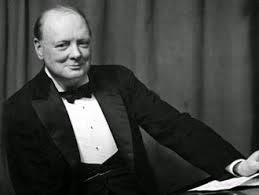
Winston in his Tux

Author Maier, an investigative reporter for Newsday on Long Island and a successful biographer of characters like Masters and Johnson, Dr. Benjamin Spock and Sam Newhouse, has done a masterful job in this latest work, a decade-long effort, and his second book to deal with the Kennedys.
... Maier’s book is a near-perfect mix of politics, business, world chaos and bedroom gossip, and even the gossip is documented with the thoroughness of a master investigator. Needless to say, there is ample gossip spread over two generations to make all 650 pages of text sizzle. (Read the whole review by hitting this link).

Winston Churchills gets US honorary citizenship from Presidernt Kennedy
 with Randolph Churchill and Jackie Kennedy watching.

CBS SUNDAY MORNING: "Masters of Sex" author Thomas Maier discusses Masters and Johnson and his biography of them turned into the acclaimed SHOWTIME series.

$
0
0
CBS SUNDAY MORNING: It's one of my favorite television shows and it was great to talk about "Masters of Sex," my biography about Masters and Johnson  turned into the acclaimed SHOWTIME series.


The popular Showtime series "Masters of Sex" chronicles the lives and work of Dr. William Masters and Virginia Johnson. Back in the 1960s, Masters and Johnson (their names are forever bound together) helped fuel the sexual revolution with their groundbreaking research into human sexuality. But their personal life was as eye-opening as any of their research.
Martha Teichner looks behind the scenes at their story.
For more info:

Amazon Great Leaders: WHEN LIONS ROAR: The Churchills and the Kennedys, Buy the First-Edition Hardcover Before the TV Show Appears

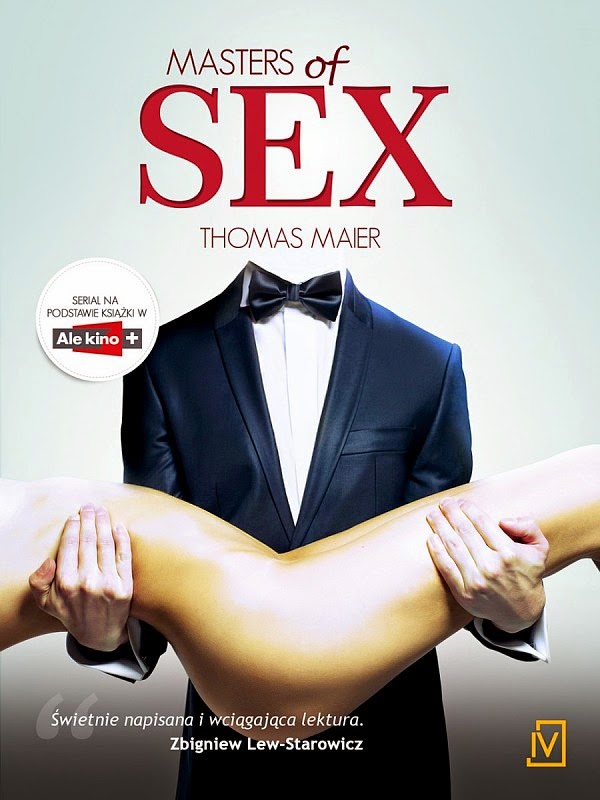
July 12 Debut for Masters of Sex: Season Three; Polish Edition of the Book Adds to International Versions; October 2015 Pub Date for WHEN LIONS ROAR paperback

$
0
0
 Season Three for "MASTERS OF SEX" debuts on Sunday July 12! Meanwhile, the latest edition of the book comes out in Polish, one of many international editions for the book and show, which is now all around the globe.

Last but now least, the paperback for WHEN LIONS ROAR comes out October 2015 from Crown! Can't wait for that book to become part of the Golden Age of Television. 


The paperback for WHEN LIONS ROAR
 comes out October 2015


Filming for "Masters of Sex: Season 3" about to begin, airs July 12; Hoping That Emmy Recognize Season 2's Accomplishments

Virginia Johnson, Kay Halle and Other Independent-Minded Women in My Biographies -- How They Were Often Overlooked by History

$
0
0
Women often play significant roles in history, yet rarely do they get proper credit. Too often biographers (especially males) have portrayed smart and savvy women as “weaker sex” afterthoughts, rather than honestly and openly exploring the impact of their relationships with powerful men. 

This unfortunate trend stretches across much of American history, a narrative largely determined by presidents, captains of industry, and other powerful men in a male-dominated society who, it would seem, preferred to act as if independent-minded women never existed. This seems particularly true if the woman wasn’t married to the powerful man being lionized.

My first experience with this “trend” happened as I interviewed Virginia Johnson for my 2009 biography, “Masters of Sex”, now the basis for the Showtime television series. Few American women in the 20th Century were more independent-minded and fascinating than Johnson, and yet she was relegated unfairly to the shadows of history along with her research partner, Dr. William Masters.

Sex was their topic in the 1950s, a time when women were still very much in an inferior role in American society. These two researchers were not married for the first two decades they worked together. So Johnson’s impact on the work of Masters and their lives together usually remained unexplored by those who wrote about them. They eventually married in 1971 and divorced 20 years later.

When I first talked with her in 2005, Johnson was 81, living alone and feeling forgotten. The nearby St. Louis university where Masters and Johnson did their ground-breaking medical research ignored her. And most young people didn’t even know their name.

Yet during America’s so-called “sexual revolution” in the 1960s, Johnson was the driving force behind many pioneering observations and therapies. For all of Masters’s academic credentials as a top Ob-Gyn, Virginia, without a college degree, possessed an innate genius about the human psyche that proved invaluable. It leveled the playing field between them, giving Johnson the chance to exert herself as an equal, rather than as an “associate” or other easily-dismissed accessory. “At least 70 percent of the therapy was her idea,” Masters later acknowledged. “Her incredible brain” mixed together all sort of influences and remedies.

Masters’ male colleagues in medicine scoffed at his claim that their revolutionary therapy model derived mainly from Johnson’s imagination: How could a woman without a doctorate come up with such a thing! The controversial topic of sex made it even easier for critics to treat Johnson like a courtesan. But Masters never backed down from supporting Johnson. Unlike other men from the past and the generations that would follow, Masters shared credit with her on their famous works.

For a woman of such independence, who had proven in the lab the sexual equality, if not the superiority of women, Johnson found it inexplicable why her life had been defined so often by men and their definition of sex. It was a common lament of many women in the 20th Century and voiced even today by women better educated, more affluent and generally with more options in life. “I was raised to be one of the greatest support systems to great men,” she explained during my interviews with her for my 2009 book. “I can remember saying out loud—and I’m appalled as I remember it—being very pleased that I could be anything any man wanted me to be. And I was proud of that, for some ungodly reason.”

In my new book about the Churchills and the Kennedys, primarily about famous fathers and sons, I was hoping to steer clear of the subject of sex. But I soon found that a number of female family members and intimate friends of both dynasties were remarkably influential in the lives of the male headliners—far more so than our traditional understanding of their role would have us believe.

To be sure, in most histories of these two families, Winston’s wife, Clementine, and JFK’s wife, First Lady Jacqueline Kennedy, and mother, Rose Kennedy, played hugely important roles. So did their brothers, best friends and other male business partners. But I was surprised how much other independent-minded women were prominent behind-the-scenes figures in this dynastic saga.
Kay Halle
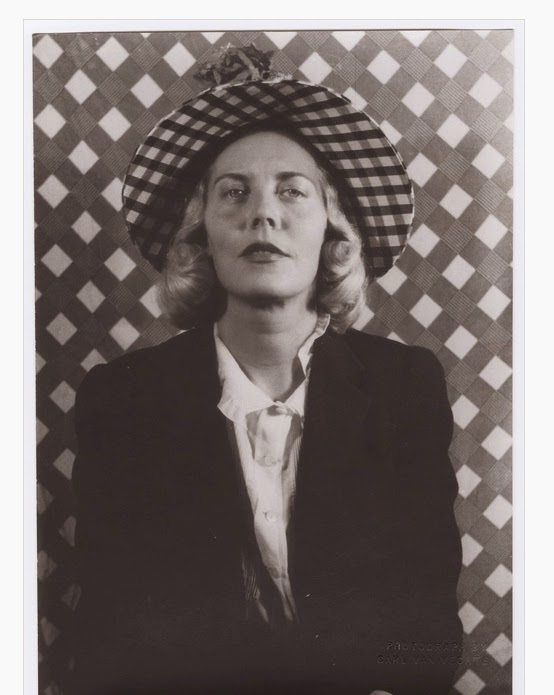
One of the most remarkable women I learned of was Kay Halle—an American journalist and wealthy heiress intimate with both families.In the 1930s, Kay nearly married Winston’s son Randolph and remained a Churchill family friend for decades. While she had a secret affair with JFK’s father, multi-millionaire Joseph Kennedy, she also managed to remain a friend and close advisor of that clan for years to come From her unique vantage, It was Halle who, almost single-handedly, convinced President John F. Kennedy to award honorary U.S. citizenship to former British Prime Minister Winston Churchill for his brave leadership during World War II. The Churchills and Kennedys had sharp bitter differences leading up to the war, but Halle prevailed on JFK to mend their differences with this first-of-its kind honor, bestowed at a splendid Rose Garden ceremony in 1963.

This instance of Halle’s behind-the-scenes involvement with both families was just one of many, almost completely unknown to history until her survivors decided to donate her letters and papers to the JFK Library. These documents, released in 2011, make this fiercely independent-minded woman come alive. “Randolph inspired me to look above the hedgerows of my young life and explore the world,” Halle wrote after meeting the Churchills.

During the WWII years, Clare Boothe Luce, a talented writer, playwright and future Congresswoman, became a close private friend of both families. “I think of you constantly and pray with Churchill that it will come out all right in the end,” Clare wrote to Joe Kennedy, then the U.S. ambassador in London, shortly after war in England began and she returned to the United States. Both she and Kennedy were married to others. But like this famous man in her life, Clare knew how to compartmentalize sex and politics. With beguiling style, she could also combine them to her own advantage.

In her writings and public statements in the late 1930s, Clare became one of Churchill’s biggest supporters in the fight against Hitler, at a time when most other Americans still wanted to avoid war. “I have thought of you and your gallant father very often since the elections,” she wrote to Randolph in 1945, after British voters removed Winston as prime minister soon after winning the war. “In or out of office, he [Winston] stands incomparably the world’s greatest man—maybe its only great one now.”

After the war, another remarkable woman, Pamela Churchill, the beautiful estranged wife of Randolph, became best friends with JFK’s sister, Kathleen “Kick” Kennedy. (She’d eventually become a U.S. citizen and was appointed by President Clinton as his ambassador to France.) But during WWII, Pamela often acted as an informal confidant to Winston Churchill and a keen diplomatic observer -- all while having an initimate relationship with President Roosevelt’s top envoy, Averell Harriman. Her importance is often lost historically. Pamela helped White House aide Harry Hopkins forge a special alliance with Churchill, allowing him to serve as a vital intermediary between President Franklin D. Roosevelt and the Prime Minister -- or as Hopkins put it, “a catalytic agent between two PRIMA DONNAS.” “Harry had an extraordinary faculty of explaining president to prime minister and I think prime minister to president, so that when they met, Churchill thought he knew Roosevelt,” Pamela observed.

Somehow, the influence of these very talented and influential women really wasn’t explored by history until many years after the fact, despite their significant contributions. The intimacy of these women with the powerful men in their life were usually dismissed as mere gossip or not germane to the larger story. Their diminished lives fell victim not only to the sexism of their times but also the patronizing, paternalistic tone of predominantly male historians.

Even women of great accomplishment were lost in this mix. In my new book dealing with John F. Kennedy, I carefully examined the little-known experience of Margaret Coit, winner of the 1951 Pulitzer Prize for her biography of John C. Calhoun. Coit came to Washington in 1953 to research a new book and wound up dating the thirty-five-year-old Massachusetts senator. The two saw each other a few times before Kennedy met and married Jacqueline Bouvier.

In an oral history virtually ignored by previous JFK chroniclers, Coit gave a vivid and insightful account of this driven, very complicated young politician and the aggressive way he apparently treated women. In their private conversations, she recalled how Jack Kennedy talked about his ambitions and about his envy of Coit’s Pulitzer. When they drove past the White House in a car, she recalled, Jack appeared quite serious as he looked through the gates. “I am going to go there,” he stated with determination.

But at other times, Coit said, Kennedy’s personality seemed to change, and his hands were all over her. “He had seen me as a mind; and now he saw me just as something female,” Coit recalled. “He couldn’t fit the two together, and it was as if he were two parts. He was like a fourteen year old high school football player on the make; and he was like an elder statesman of sixty in his intellectual process—the two together and it was the cold machine-like quality that scared me so.”

Although Coit was a Pulitzer-winning historian, her fascinating account rarely appears in the histories of this future president.

Ironically, this historical double-standard on sex could apply to the ambitions of Kennedy women as well. Eunice Kennedy, perhaps the smartest of the Kennedy children, graduated from Stanford University, but the goals and ambitions for Eunice were never the same as they were for her brothers. Patriarch Joe Kennedy, keenly aware of bigotry against his own kind as an Irish-Catholic, didn’t seem bothered by inequality facing his daughters. “If Eunice had balls, she would have been president,” her father bragged, without a sense of irony.

Yet too often the absence of sex and gender concerns skewed our understanding, as if these women couldn’t possibly have contributed significantly to such traditionally male topics as science, medicine, power and politics.

Today, there are many things we can learn from these independent-minded women of the past, not the least of which is the sheer determination of will and the desire to succeed. But history must first be willing to examine their full, often intimate lives with the celebrated men who often received all the glory.


Pope's Comments on Armenian 'Genocide' Mirror Churchill's Comments in Book Later Read by Young JFK

$
0
0


On Sunday, Pope Francis labeled the century-old killing of more than 1 million Armenians by the Ottoman Turks as "the first genocide of the 20th century". It called to mind what Winston Churchill wrote about that slaughter in his book THE WORLD CRISIS.

Readers of my book WHEN LIONS ROAR: The Churchills and the Kennedys will find a scene in which Kay Halle, a friend of both families, recalls how she visited a sick 15-year-old John F. Kennedy in his Boston hospital bed and found him reading Churchill's "The World Crisis." 


Allison Janney Returns to MASTERS OF SEX Season 3 for Four Episodes. Reprises Her Emmy-Winning Role as Margaret Scully

$
0
0

Beau Bridges and Allison Janney in Masters of Sex on Showtime

"I think it worked out that I'm going to do four episodes," Janney told Zap2it. "I'm really excited to come back to that. I have no idea what they're going to do with Margaret Scully, but I can't wait to find out." 

Janney says that previously, it worked out that she was filming the two shows separately, but this time around, it looks like she'll be pulling double duty. 

"It might turn out that I'll have to be doing ['Masters of Sex'] at the same time when I go back for Season 3 of 'Mom.' It'll be my hiatus week, which will be interesting," says Janney. "I didn't have to do it at the same time before, it worked out that I could do them both separately. But fortunately the characters are so different and the time period is so different that I think it's easy for me [to go back and forth]." 

Kick Kennedy & Pam Churchill : A Fateful, Dynastic Friendship Between Two Daughters of the Two Famous Families

$
0
0
Kathleen “Kick” Kennedy, the favorite sister of future U.S. president John F. Kennedy, and Pamela Churchill, the daughter-in-law of British Prime Minister Winston Churchill, enjoyed one of the closest relationships between the two world famous families -- one filled with passion, politics, humor and ultimately tragedy. This is an excerpt from “When Lions Roar: The Churchills and the Kennedys” by Thomas Maier.

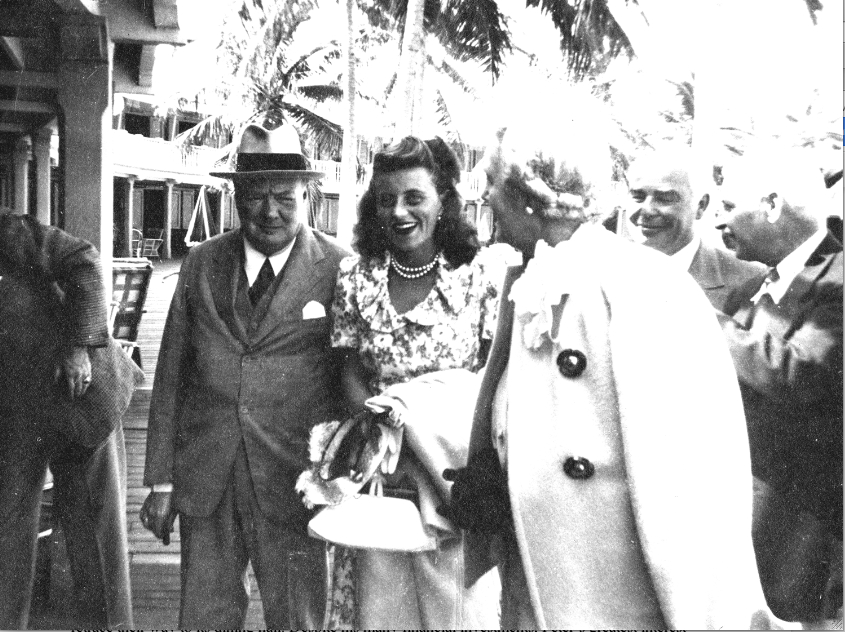
Winston Churchill and wife Clementine with Kathleen “Kick” Kennedy during 1946 Florida trip. Credit: JFK Library.

After the war, Kick Kennedy and Pamela Churchill’s friendship grew closer. They were no longer vaguely familiar debutantes with little in common but rather an American widow and British divorcée, both in their mid-twenties, whose experiences and social circles in war-torn London had bonded them together.
With her family in America, Kick still maintained the good-girl veneer that her mother insisted upon. On her own in London, she’d become more independent-minded, especially after the death of her husband Billy Hartington during the war. Though she didn’t approve of every adulterous move by Pamela, Kick appreciated the other woman’s spirited, devil-may-care approach to life. For all the friendship and favors Pamela Churchill provided in London, Kick Kennedy felt compelled in 1946 to invite her for an extended wintertime vacation in Florida. Kick “was my close friend and that’s how I came into the Kennedy family,” Pamela recalled decades later. “The first time I ever came to America, I stayed with the Kennedys down in Palm Beach.”
As an honorary Kennedy, Pamela found herself enthralled by the family’s dinner table conversation about politics. She went shopping with Rose Kennedy and appeared in the local newspaper columnist’s list of “Best Sundressed Women in Palm Beach,” even though she appeared “quite pale when near the other deeply tanned beauties.” With Kick and her parents, Pamela also enjoyed the Sunday races at Hialeah. After enduring so many wartime hardships and material restrictions in England, Pamela was amazed by the extravagant wealth and undisturbed beauty of America.
When the former prime minister arrived in Florida, Kick joined the Churchills as part of their entourage. She rode with them in a special car, escorted by twenty policemen on motorcycles, to the Orange Bowl stadium, where they watched Winston receive his honorary degree from the University of Miami. Afterward, Kick joined the Churchills at the Surf Club. Under a cabana at this private resort, Winston took out his oils and composed a painting of the endless blue-green Atlantic and darkened clouds on the horizon giving way to daylight. On this warm afternoon, the Churchills brought along their bathing suits and decided to go for a swim. “Winston presented a very comical sight, bobbing around in the surf,” Kick wrote in her diary. “He adores the water though I must say I wouldn’t enjoy swimming in such a public spot every day.”
As they entertained themselves at the Surf Club, Kick laughed along with the prime minister, flashing her wry smile and throwing back her thick and curly auburn hair. Unlike during her war years riding a bicycle in a Red Cross uniform around crumbled London, Kick, with her distinctive beauty in the Florida sun, now appeared more womanly than girlish, whether wearing pearls with a summer dress or all wet in her polka-dot swimsuit.
Eventually, Winston inquired about Kick’s father, with whom he had a tense encounter a few weeks earlier at Hialeah Park.
“He sends you best regards,” Kick answered.
Winston’s face soured. “He makes an exception in my case,” he said with a harrumph. The two men had a bitter falling out over the war, with Joe Kennedy opposing the war that ultimately claimed his oldest son, Joseph Jr.
The ambassador wasn’t pleased when his daughter, with some bemusement, repeated Winston’s comment to him. “Daddy took umbrage at this remark,” she noted in her diary.
Pamela Churchill

Along with the inviting sun, Pamela Churchill sought refuge in Florida with the Kennedys for another reason besides getting a tan. As Kick knew, her friend had flown to America partly on the expectation of getting married to her wartime lover, CBS broadcaster Edward R. Murrow.
While in London together, Pamela fell deeply in love with the suave, older American journalist, who promised to divorce his wife when he returned home to New York. Murrow, who admired Winston Churchill, detested Joe Kennedy as an appeaser. He chastised Pamela for vacationing at his Florida home, which he likened to “staying with [Nazi Gestapo leader Hermann] Goering.”
In Palm Beach, however, Pamela heard from Murrow that he’d decided to remain with his wife and his newly born son, Charles Casey Murrow. casey wins, he telegraphed to Pam, who was shattered by the news. Her divorce from Randolph Churchill, filed in December 1945, had left her free to marry Murrow after their long affair. Even Randolph’s parents, former British Prime Minister Winston Churchill and his wife Clementine, seemed to wish for Pamela’s happiness away from their son. Never forget not only are we devoted to you but you are the mother of my grandson,” Churchill told her.
While in Palm Beach, Pamela obtained a better sense of Joe Kennedy and his commanding grip on the lives of his children, now well into adulthood. Much of the talk touched on Jack’s impending congressional race in Massachusetts and how the family would rally behind him. Kick idolized her father and laughed off any suggestions about his questionable behavior. When a British tabloid portrayed the former U.S. ambassador as a playboy in Palm Beach, Kick couldn’t help sharing it with the rest of the family in one of their round-robin letters.
“I think it shows there’s a lot of life left in that old man of ours if he can start being a playboy at his ripe old age!” she teased. Whether Old Joe was attracted to Churchill’s former daughter-in-law later became a source of conjecture. Writer Truman Capote, a social friend with Pamela in the 1960s, suggested one of his novel’s characters was based on Pamela’s stay at Palm Beach, when the senior Kennedy allegedly slipped into her room in the middle of the night and pressed her into having sex with him. “The sheer ballsy gall of it—right there in his own house with the whole family sleeping all around us,” says the character Lady Ina Coolbirth in Capote’s book, repeating the story, never proven, he claimed Pamela recounted over lunch. For whatever reason, Pamela abruptly decided to leave Palm Beach. She stayed with another American friend, Betsey Whitney (the former wife of Jimmy Roosevelt who had married Jock Whitney) and then returned to New York, where Murrow attempted to renew their affair, without success.
Determined to return to Britain, Pamela contacted Lord Beaverbrook, seeking his advice as she had done since her marriage to Randolph. The press lord offered Pamela a job writing society articles for one of his London newspapers, and she traveled back on the Queen Mary. Like some real-life novella, Pamela Churchill’s arrival in England coincided with another twist in her love life: the return of Averell Harriman. In April 1946, President Truman appointed Harriman as U.S. ambassador to the Court of St. James, the same post once held by Joe Kennedy. Harriman replaced Gil Winant, whose bouts with depression had ended whatever effectiveness he once had in the job. Ave returned to London without his wife, Marie, or his daughter, Kathleen, and soon resumed his indiscreet affair with Pamela. The rumors started circulating again (with Randolph complaining to friends that he should have named Harriman as a co-respondent in his divorce proceedings), though Harriman’s tenure didn’t last long.
While having lunch with Winston Churchill in September, the White House called looking for him. The former prime minister guessed correctly that Truman wanted Harriman to fill the open job of U.S. commerce secretary, a Cabinet position in the postwar years far more advantageous than London. When Ave asked if he should accept the president’s offer, Winston didn’t hesitate. “Absolutely,” he replied. “The center of power is in Washington.”
The politically ambitious Harriman quickly accepted and jumped to Washington. Pamela remained in London while Marie Harriman continued living in New York. Ave’s wandering eye soon found another object for his affection, in the nation’s capital. He spent nights with Kay Halle, the heiress friend of both the Churchills and the Kennedys, with many Democratic Party connections of her own in town. Friends soon heard rumors that Harriman wanted to leave his wife for Halle. “On weeknights, the commerce secretary’s limousine was frequently parked at Halle’s house in Georgetown,” wrote Harriman biographer Rudy Abramson. “The proximity—and Halle’s high visibility and earnest intentions—made the matter more irritating to Marie than the wartime affair with Pamela had been.” But Halle never harbored a serious intention of marrying Harriman, her friend Timothy Dickinson told another biographer. “She knew if she married Averell she would be bullied beyond belief,” Dickinson explained.
Passion with the men in Pamela’s life was often mixed with sexual hypocrisy and double standards. Certainly Murrow’s withering criticism of her friendship with the Kennedys carried an odd stamp of moral disapproval. And at a chance meeting, Harriman “rather sanctimoniously blurted out that she was ruining her life” by flitting from one powerful man to another, implying that she was patterning her life on that of Lady Jane Digby, her ancestor often described as a courtesan. That stigma was unfair, insisted Pamela’s brother Edward. “While she was actually in a relationship, Pam was never unfaithful to her lovers,” Lord Digby said years later; “in most cases it was the man who strayed while Pam was entirely focused on that man.”
For Pamela, no friend seemed better able to understand these contradictions than Kick Kennedy, who returned to London soon after her Florida vacation. In their short existence, both young women had witnessed tragedy beyond their control, yet continued to define daily life on their own terms. “Mother and I were talking it over last night and decided nobody in the world twenty-five years of age has had the kind of life you’ve had or as interesting,” Joe wrote his daughter, suggesting her diary could become a best-selling book. Rather than spend her life in postwar America, though, Kick felt most comfortable in England, in the Brideshead Revisited world portrayed by her friend Evelyn Waugh. “I know it is unfair that so few should have so much etc. but there’s a certain grandeur, tradition, strength that is very much part of the England that would disappear without them,” she explained about the old homes and castles, especially the Devonshires’ Chatsworth estate. “I know my little brothers will think ‘Kick has gone more British’ than ever, my persecuted Irish ancestors would turn over in their graves to hear talk of England in this way but I don’t care. I think a landed aristocracy can be an instrument of good just as much of evil and when it is the former then —‘preserve it.’ (You’d better not let Grandpa Fitz see the above.)”
In this world, the Churchills were the defenders of a way of life that now existed mostly in words and memories—a paradox that the Kennedys (especially Kick), as Catholics bound by a sense of tradition, understood better than most. She teased and joked about many of the ironies, yet wished to remain a part of postwar England. In a letter home, she mentioned one of Randolph’s commando pals, Robin Campbell, who talked to her about his two years in a German prison camp, and spoke of the influence of religion on her friends. “Apparently Robin was so impressed by the Catholic Chaplain in the prison that he is thinking seriously of becoming one, much to the amazement and shock of his various relatives,” Kick wrote her parents. “Have heard the same thing about Randolph Churchill. Can you imagine him as a pillar of the Church?”
When Kick chatted with Lord Hugh Cecil, who had been best man at Winston Churchill’s 1908 wedding, she mentioned her own tragic marriage to the future Duke of Devonshire. In the eyes of her Catholic Church, Kick explained, “Billy and I had been living in sin.” Lord Cecil, a strong Anglican capable of outdebating Winston in their early days, merely rolled his eyes. “But so many of one’s friends are nowadays,” he sighed.

***

In postwar London, several of Randolph Churchill’s Oxford friends and commando veterans visited the white Georgian house on Smith Square owned by Kick Kennedy, the widowed Lady Hartington, a lively parlor for politics, the literary arts, and forgetting the heartbreaking past.
In Kick’s new home, located near St. John’s Church, where her friend Pamela Churchill had married Randolph years earlier, the two young women shared many laughs and gossipy stories about the Churchills and the Kennedys. “Kick’s house is really very cute, very nicely furnished,” described her sister Eunice during an October 1946 visit. “We hold a salon every night from 6 to 8 here at home; otherwise you can’t tell where we might be.” One constant visitor, Seymour Berry, the best man at Randolph’s wedding, dated Kick frequently enough that some friends thought they might get married. In this same circle of friends was Freddie Birkenhead (son of Winston’s best friend, the late F. E. Smith), who had served in Croatia with Randolph and Evelyn Waugh. By far, Waugh was the best known of Randolph’s friends to attend Kick’s dinner parties, and the most opinionated. While he found Kick attractive, Waugh thought the sentimental oil painting she kept on her wall of her dead husband, Billy (commissioned from an old photo of him in uniform) was “most God awful.”
As a Catholic convert, Waugh considered the Hartington wedding as unholy, a selfish act of apostasy. At one party, he sat next to Kick and gave her a lecture on Catholic marriage law. She seemed amused enough by this celebrated novelist not to take offense. Evelyn, who regained the roly-poly weight he’d lost during the war, mistook her attention for infatuation and noted, “The widow Hartington is in love with me, I think.” With Frank Waldrop, her old Washington newspaper editor, she later laughed about Waugh’s moralizing until she suddenly stopped. “You know, Frank, I had only five weeks with my husband,” she lamented, “and now he is gone.”
Inside her London group of acquaintances, William Henry Lawrence Peter Wentworth-Fitzwilliam, the Eighth Earl of Fitzwilliam (simply “Peter Fitzwilliam” to friends) emerged as the most intriguing and fateful for Kick. Her attraction to this swashbuckling, wealthy, and married war hero—far different in character from Billy Hartington—would lead to a secret love affair that once again caused conflict within the Kennedy family. Kick first met Fitzwilliam, the son of one of England’s richest families, at a June 1946 victory ball honoring the commandos. During the war, Randolph, Waugh, and Fitzwilliam, all drinking buddies from White’s, served together in the Middle East. Indeed, on the boat ride to Cairo, it was Fitzwilliam to whom Randolph lost a huge sum in a poker game—a financial crisis that ruptured Randolph’s marriage with Pamela and only added to Fitzwilliam’s notoriety as a gambler. In a begrudging tone, Waugh referred to Fitzwilliam as “king dandy and scum.”
In 1938, Kathleen Kennedy attended London event with mother Rose and sister Rosemary.

At the commandos ball, Kick turned plenty of heads with her pale pink gown, an effervescent smile, and a sense of humor that could captivate a room. That night at the Dorchester Hotel, Fitzwilliam’s wife, Olive, an heiress to the Guinness brewery fortune, served as president of the ball fund. Among the honored commando veterans, Fitzwilliam was singled out for a brave special mission during the war. Basking in the limelight, Peter nevertheless spent enough time with Kick to spark a romance, brazenly in front of his wife. By that point in their marriage, Olive had learned to look the other way when her husband flirted with other women. At such gatherings, she’d down drink after drink, enough so that she eventually became an alcoholic.
After the commandos ball, Fitzwilliam became a favored visitor at Kick’s home in Smith Square. Friends worried for her reputation with such a charming adulterer, and that she might wind up hurt. “You don’t know him—you don’t know him,” Kick insisted. Both lovers tried hard to keep their affair private, escaping London to the Fitzwilliam family’s estates throughout England and Ireland. A dashing man with thick dark hair, Peter showed enough business acumen with his outside investments to rival Joe Kennedy. His family, whose wealth was the stuff of legend, had the largest residence in England, a three-thousand-acre estate. This huge Georgian mansion, called Wentworth Woodhouse, contained 365 rooms (one for every day of the year), enough so that, in the eighteenth century, Peter’s ancestors gave guests paper wafers to leave in the hallways to retrace their way to its dining hall. Despite his many financial investments, Peter’s greatest interest centered on thoroughbred horse racing. He owned one of the best stud farms in England, and invited Kick to join him in racing excursions to France. Pamela Churchill came along with Kick as a sidekick and camouflage. “Kick was the perfect friend for Pamela, non-judgmental and fun-loving,” wrote biographer Sally Bedell Smith. “As the daughter of Lord Digby, Pamela knew her way around racecourses and fit in comfortably with turf society.”
In her letters home, Kick gave her parents glimpses of this glamorous world, mentioning a week-long trip to Paris with Pamela and Virginia Sykes, a former girlfriend of her late brother, Joe. In her correspondence, Kick could be catty and gossipy, the way all Kennedys enjoyed dishing in private. Aware of his mother’s disapproval of American Wallis Simpson and her affair forcing King Edward VIII’s abdication, Kick wrote of seeing the Duchess of Windsor and her husband on the social circuit and painted the woman he loved in pathetic tones. “Really, no one here takes any notice of them & the extraordinary thing is that I actually feel that she is jealous of what I, as an American, have got out of England and which has always been denied to her,” she told her parents. Kick played to the Kennedy family’s competitive streak in her Anglo-American exchanges. “After Pam’s dinner party, we went to her sister’s debutante party,” she wrote. “It gave me quite a turn to see all the ugly girls. Americans of that age certainly have them all beat.”
While visiting Ireland in November 1946, Kick’s more serious-minded younger sister Eunice stayed with her at Lismore Castle, the Irish estate owned by Billy’s family. They went to the races with a soft Irish rain falling, much different from the climate at the always sunny Florida track their father owned. “It was certainly the furthest possible cry from Hialeah,” Kick wrote to her parents. “But the characters around an Irish racecourse certainly make the whole day worthwhile.” The letter home mentioned Fitzwilliam, but did so misleadingly, avoiding any parental upset. Though Eunice accompanied her, Kick dared not explain to her sister the true nature of her relationship with the Eighth Earl of Fitzwilliam.
At Lismore Castle, Pamela Churchill joined Kick’s other high-powered friends from London when her brother Jack visited in September 1947. While on a European fact-finding mission with other House members, Congressman Kennedy tacked on his own extended holiday in Ireland with his sister. “I hope Jack will let me know when he is planning to arrive at Lismore and if anyone is coming from America,” Kick wrote home several weeks beforehand. “I don’t want everyone to arrive at once.”
Lismore, built centuries before, felt like a step back into history, a time when the British Empire dominated Irish Catholics in their own land. With some amusement, Kick reminded her family that she was now living in the place where Billy’s great-great-uncle was “brought in here, dying, when shot [sic] by Irish patriots in 1882.” With its ancient stone walls and turrets along the River Blackwater, the castle offered plenty of beauty and spacious rooms for Kick’s various guests. The list of invitees included Winston Churchill’s cousin Sir Shane Leslie, and most notably Anthony Eden, Churchill’s top foreign adviser, who had suffered the same family tragedy during the war as the Kennedys. In July 1945, Anthony lost his beloved fighter pilot son, Simon, in Burma. Yet Eden’s judgment of Churchill was far different from that of the embittered former ambassador Kennedy. “It is you who have led, uplifted and inspired us through the worst days,” Eden wrote Winston on V-E Day. “Without you this day could not have been.”
Despite their differences, Kick knew her father liked and respected Eden and would enjoy knowing of her invitation to meet Britain’s future prime minister. “Anthony Eden arrives today so by the end of the week he and Jack will have fixed up the state of the world,” she wrote home whimsically. Eden, a handsome man known for his distinctive clothing style, had already made an impression on Jack years earlier: Jack wrote to a friend that he’d been “sporting around in my morning coat, my ‘Anthony Eden’ black Homburg and white gardenia.” Talking politics at Lismore was part of the guests’ relaxation. “Anthony Eden, who was very easy to entertain, arrived loaded down with official looking Conservative documents but when he had been here only a few days got into the Irish spirit,” Kick reported. “Jack liked him enormously.”
Though nearly twice her age, Eden courted Lady Hartington with a fair degree of romantic interest. At a dinner party the year before, society hostess Lady Cunard had kept leaning toward them and asking loudly, “Anthony, don’t you think Kick is pretty?” followed in another breath by “Kick, don’t you think Anthony is wonderful?” Three months before his Lismore trip, Eden had escorted Kick to the Ascot Racecourse outside London, where he received a polite reception from the crowd. “They’ll cheer but the blighters won’t vote for us,” he whispered to Kick. The couple dined at Eden’s house, where Kick learned more about his troubled marriage. Eden’s wife, Beatrice, hated his political career, and she moved permanently to the United States after their son was killed in the war. “She [Mrs. Eden] is in America and refuses to return so he lives in a rather squalid little house with very few comforts,” Kick described. “He is a nice man and fascinating to talk to for me.” If Eden knew about Peter Fitzwilliam, it didn’t stop him from showing an interest in Kick even after the Lismore visit. “I long to see you,” Eden wrote in a lengthy missive to her. “I love your letters, especially when you write as you talk, for then I can imagine that you are here. How I wish that you were, and I do believe that you would enjoy it too.”
Strolling Lismore together, Kick let Jack know of her romance with Peter Fitzwilliam. She spoke glowingly of Peter, as if he were standing right before them, with an intensity Jack had never really known in his own love life. Jack listened fraternally, and didn’t prod or condemn. For now, Kick’s older brother was the only Kennedy family member she’d tell. Jack could be trusted to keep her secret.
While in Ireland, Congressman Kennedy remained intent on discovering his family’s roots. During his earlier 1945 trip, which included meeting Éamon de Valera, Kennedy had packed several books about Irish-American history. But on this trip, Jack planned an unannounced personal visit to the old Kennedy homestead in nearby County Wexford. While Kick’s other guests played golf, Jack convinced Pamela Churchill to accompany him for the four-hour journey in his sister’s American-made station wagon. Pamela shared the same sharp social antennae as Kick, but she wasn’t attracted to her successful brother. “In England we dated very much older men and Jack seemed, well, boyish,” Pamela recalled, though the congressman was three years her senior. “Skinny and scrawny, actually. Kathleen’s kid brother. Not eligible, so to speak.”
The road to Wexford was a long one. A century earlier in 1848, in the teeth of the Irish famine that claimed a million lives, Jack’s great-grandfather Patrick Kennedy left his family’s homestead (a drab whitewashed stone house with a thatched roof and only thirty acres on a tenant farm in small area known as Dunganstown) to begin a new lease on life in a poor immigrant section of East Boston. What happened to the succeeding generations of Kennedys would be nothing less than miraculous. They became emblematic of the rise of Irish Catholics, as America’s first large wave of immigrants who redefined their adopted nation. Rather than the British class lines of peerage or inherited wealth, Jack’s two grandfathers relied on their two faiths, Catholicism and the Democratic Party, to gain power in New England. Certainly Honey Fitz and P. J. Kennedy learned that hand shaking at parish Communion breakfasts, patronage deals through the political clubhouse, and the constant courting of ward bosses and Church hierarchy would pay off at the ballot box. Despite his millions from Wall Street and Hollywood, Joe Kennedy’s greatest triumph was his appointment to the Court of St. James, overcoming the strictures of his Irish-Catholic immigrant background. Nothing defined the differences between American and British society more starkly than this social ascendancy through Yankee ambition rather than noble blood and class distinctions. The Kennedys’ climb to the top proved “the hardest and longest move of all—inching up the rungs of the class ladder until the Kennedys stood near the top and could look as equals on the dukes and earls whose ancestors had ruled their native land,” JFK’s earliest biographer, James MacGregor Burns, explained. Joe Kennedy made sure his sons understood these lessons, prompting Jack’s curiosity to learn more about his family origins.
At the Kennedy farm in County Wexford, accompanied by Pamela, Jack discovered not much had changed since his great-grandfather left. “I’m John Kennedy from Massachusetts,” he said after his knock on the door was answered. “I believe we are related.” His distant cousin Mary Kennedy Ryan seemed dubious at first but eventually invited the two strangers in for tea.
The Kennedys who remained in Ireland had spent much of the past century trying to regain the land rights to their tenant farms from the British and supporting Ireland’s independence movement led by such politicians as de Valera. Mary Ryan herself had been a member of the old IRA’s women’s auxiliary during the 1920s conflict against the British, carrying guns and money, either in carts or under her dress, to a secret hiding spot near their farm. “Jack kept pressing on about his ancestors going to America and so on, trying to make the link,” recalled Pamela. As a treat, Jack took the Irish Kennedy cousins for a short ride in Kick’s shining new station wagon, accompanied by the former Mrs. Randolph Churchill. “They never could figure out who I was,” recalled Pamela. “‘Wife?’ they’d ask. I’d say no. And they’d say, ‘Ah, soon to be, no doubt!’”
After nearly two hours “surrounded by chickens and pigs,” Jack recalled, he “left in a flow of nostalgia and sentiment.” The trip reaffirmed the Irish stories he’d heard from his parents and grandparents. Neither Pamela nor Kick, however, seemed impressed. As their car pulled away from the Kennedy farm, Pamela turned to Jack with a remark meant as witty. “That was just like Tobacco Road!” she tittered, referring to the popular novel about rural life in Georgia. Jack wasn’t amused. “The English lady,” he later recounted, ”. . . had not understood at all the magic of the afternoon.” To Dave Powers and Ken O’Donnell, his Irish-Catholic political aides from Boston, he was much blunter: “I felt like kicking her out of the car.” At Lismore, Lady Hartington was even haughtier. After listening to her brother’s wondrous account of the Kennedy homestead, Kick mustered only a bemused question. “Well, did they have a bathroom?”
Throughout his Irish trip, Jack suffered an unexplained, debilitating illness with little relief. Eventually he flew back to London, staying at the Claridge’s hotel in Mayfair, where he collapsed. He sought help from Pamela, who had also returned to the city. “I need a doctor,” Jack told her desperately over the telephone. Pamela convinced her doctor, Sir Daniel Davies, also used by Lord Beaverbrook, to go see him immediately.
Kennedy’s wartime back injury and malaria usually provided a plausible public explanation for his often sickly appearance and yellowish skin tone. Pam’s doctor first diagnosed Jack’s symptoms as those of Addison’s disease, a chronic disorder of the adrenal glands with symptoms of weight loss, dizziness, nausea, diarrhea, and muscle fatigue. Sir Daniel kept him at the hospital, where Jack received lifesaving cortisone injections. “That American friend of yours, he hasn’t got a year to live,” the doctor informed Pamela.
Ravaged by his strange illness, Kennedy remained in a London hospital for weeks and was given the last rites of his church. In mid-October 1947, he traveled home with his mother across the Atlantic, confined to the sick ward of the Queen Elizabeth. He was then flown by charter plane from New York to Boston, and carried on a stretcher, drawn and pale, into the New England Baptist Hospital until he could recover. Misled by Joe Kennedy’s publicity men, the press claimed the congressman suffered from “a malarial attack.” No one suspected otherwise.
Friendship with the Kennedys required keeping secrets. As Kick’s confidante, Pamela Churchill became privy to Jack Kennedy’s biggest secret: the potentially fatal medical condition that could keep him from his family’s vaunting political goals. Yet there was no doubt she could be trusted, just as she was with so many intimacies about the Churchills. “I knew the Kennedys very well,” Pamela explained a half century later. “Kick was my closest friend in those days.” Pamela understood the power of such information. As the friendly siren of the Churchill Club during the war, she listened carefully to the conversations of American military brass, politicians, and prominent U.S. journalists—and then reported the most significant details to her father-in-law, the prime minister. “Basically, I’m a backroom girl,” Pam explained. “I’ve always said this and I’ve always believed it.”
In February 1948, Kick wanted Pamela Churchill to come with her again to Florida, just as she had when Winston visited in 1946. Visiting Palm Beach in winter gave Kick the chance to catch up with her family, to let them know more of her new life on the other side of the Atlantic. But this year the complicated love lives of these two young women didn’t allow for such an idyllic trip together in the sun. Kick had hoped Pamela’s presence might make it easier for her to tell her parents about her intention to marry Peter Fitzwilliam. Kick convinced Elizabeth Cavendish, her late husband Billy’s sister, to come with her to Palm Beach, as a false sign the Devonshires approved of Kick’s new love. In fact, Elizabeth harbored strong doubts and offered support only because Kick seemed “terrified” of confronting her mother. Among Kick’s London circle of friends, few believed Fitzwilliam would bring her anything but heartache. At dinner the night before she left for America, Kick burst out crying when David and Sissy Ormsby-Gore condemned Peter’s dishonorable character. Like the Jesuits she consulted, Kick heard the Ormsby-Gores predict ex-communication from the Catholic Church if she married Peter.
A sexual passion unlike she’d ever known before apparently compelled Lady Hartington to risk everything dear. “Her friends began to suspect that she had begun sleeping with him,” wrote her biographer Lynne McTaggart. “She didn’t seem to care anymore whether the affair was kept a secret or her reputation remained unsoiled.” Her old newspaper friend John White noticed a change in Kick’s demeanor; she was no longer the virginal Kennedy princess. Instead of duty, desire now motivated her actions; instead of obedient faith, a blinding happiness. “I was overjoyed to see that she had finally been awakened,” White observed. “Rarely in life do you see someone so bubbling over with love, everything that love should be, every bit of it. Poor old Billy Hartington. But again he probably would have been blown away if she had felt that way about him.” As word of her affair spread within her Smith Square salon, even Evelyn Waugh weighed in with advice. He’d later claim to Clarissa Churchill, Winston’s niece, that Kick sought his opinion about what to do about “le scandale Fitzwilliam.” Waugh suggested to Kick that having sex with a married man was relatively venial compared with the cardinal sin of leaving the Church. “If you want to commit adultery or fornication & can’t resist, do it,” Waugh cautioned, “but realize what you are doing, and don’t give the final insult of apostasy.”
During her nearly two-month-long stay in Florida, Kick never mentioned Peter’s name. Not until the last day of her trip, when the Kennedys were all together for a joyous occasion, did the twenty-eight-year-old Lady Hartington inform her parents like a wayward child. At the Greenbrier hotel in White Sulphur Springs, West Virginia—where Joe and Rose spent their 1914 honeymoon—the family gathered among some three hundred celebrities, wealthy tycoons, and society types to attend an April 17, 1948, gala hosted by the hotel’s owner. Hollywood star Bing Crosby sang “White Christmas” and other well-known tunes, while Kick convinced the band to play her favorite “How Are Things in Glocca Morra,” from Finian’s Rainbow, a new show on Broadway. Recovering from his illness, Jack flew in from Washington to join the fun.
Near night’s end, Kick stunned her mother by announcing her love for Fitzwilliam and their plans to marry when she returned to England. Kick’s adamant resolve was met by an even sharper, firmer rebuke from Rose. To this deeply religious matriarch, it seemed unconscionable that her daughter would break up an existing Fitzwilliam family to wed a divorced man. All Kick’s conciliatory letters from England—the vain effort to reconcile herself with her religion and her mother after marrying Billy Hartington, seeking her approval by attending religious retreats—now sounded hollow. As Rose realized, she’d been betrayed by both her daughter’s adulterous behavior and the apparent complicit knowledge of her son Jack and her own husband. No longer would Rose Kennedy look the other way. If Kathleen married this man, she emphatically told her daughter, she would no longer have anything to do with her, she’d be dead in her mother’s eyes. And if her husband went along with this unholy arrangement, Rose indicated there would be dire consequences for their own union. In a rare instance, Joe Kennedy kept silent. He knew Rose’s threat endangered their “family enterprise”—the magnificent Kennedy clan they had invested their whole lives in—and would shatter his relationship with his daughter Kathleen, who, Rose once told Lady Astor, was her husband’s “favorite of all the children.” Joe weighed his options as Kick left the next day for London.
In a sense, Joe Kennedy faced a similar predicament as Winston Churchill did with his favorite child, actress Sarah Churchill. She married two rakish husbands of whom the prime minister fundamentally disapproved. But whereas Winston did not seem able to keep his hurtful comments at bay, Joe proved far more adept and diplomatic with his children, even in the most inciting moments. He didn’t explode or risk the permanent expulsion of his daughter. “The measure of a man’s success in life is not the money he’s made—it’s the kind of family he has raised,” he insisted to a reporter in 1943, when his own political wilderness seemed to have no end. “In that, I’ve been mighty lucky.” At least for the moment, Joe honored his wife’s principled stand and did nothing to contradict her. Rather than fight, he  soon left for Europe as part of a government commission study of the Marshall Plan. Kick contacted her father and pressed for a May 15 meeting in Paris. She felt strongly that if her father met Peter Fitzwilliam, he might recognize qualities similar to those in himself and give his tacit approval of, if not his blessing for, their marriage. To persuade her father, she planned to ask her British friend Janie Kenyon-Slaney and her husband, Max Aitken (Lord Beaverbrook’s aviator hero son), to join them in Paris. Max knew Peter; perhaps Beaverbrook’s son could ease the senior Kennedy’s objections. It was her father’s love, more than that of anyone on her family, that Kick didn’t want to lose.
Impulsively, a few days before this fateful meeting, the couple decided to fly from London to southern France, to spend a Whitsun holiday in Cannes drinking up the sun along the Riviera. Halfway into the journey, their chartered plane stopped in Paris because of stormy weather ahead. Peter impatiently called some horse owner friends, who agreed to share an impromptu leisurely lunch at a Paris café. When he and Kick returned to the airport, the plane’s pilot warned them that dangerous clouds remained in the skies, near the mountains leading to Cannes. Unaccustomed to not having his way, Fitzwilliam convinced the pilot to run the risk anyway, and he and Kick climbed back into the plane. Kick urged Pamela Churchill, who had come to the airport with them, to join them for the short trip. For reasons of her own, Pam declined. Instead, she “put them on the plane together,” as Pam recalled, and watched as they flew away.
Several hours later, Joe Kennedy received a call from the press at his Paris hotel suite letting him know that his daughter was dead. The small ten-person plane had lost control and crashed, killing everyone aboard. Kick’s battered body was carried by oxcart from the mountainside scene. The wartime widow’s search for happiness, the hope that her father might like Peter and support her decision to marry, was now over, covered up in misleading accounts of why they were together in the first place.
Alerted about the missing plane, Congressman Kennedy waited on a sofa in Washington, listening to Kick’s favorite song from Finian’s Rainbow, until the telephone rang again and he and his sister Eunice received the final word. Jack cried and eventually left the room to mourn alone. He later flew to Boston to gather with his mother, Rose, and siblings at the family’s Hyannis Port home. In his sorrow, Joe accepted a gracious offer by the Duke and Duchess of Devonshire allowing Kick to be buried near their Chatsworth castle, the scene of so many happier times before the war, rather than have her remains brought back to the States. Billy’s parents knew of Kick’s secret affair with Fitzwilliam and shared the Kennedys’ desire to keep it out of the obituaries. The ambassador had come to Paris with one of his favorite fixers, Boston’s former police commissioner Joseph F. Timilty—exactly the kind of gruff, bushy-eyebrowed accomplice Joe needed to tell a man he couldn’t marry his daughter. He’d even visited his Vatican friend Count Galeazzi, the pope’s top aide, for an ecclesiastical solution to Kick’s dilemma. Shattered by her death, Joe scribbled a note on his way to claim her body: “No one who ever met her didn’t feel that life was much better . . . We must not feel sorry for her but for ourselves.”
At Kick’s funeral, the former ambassador was the only Kennedy in attendance. Rose’s adamant condemnation of Kick’s behavior chilled the idea that the whole family might attend. At first Jack tried to go, but passport problems made him stay home. More than two hundred mourners paid their respects. Joe Kennedy, dressed in a rumpled suit, barely spoke. Many still viewed him as the appeaser who’d abandoned England at its most desperate hour. “He stood alone, unloved and despised,” recalled Alastair Forbes, one of Kick’s friends.
Despite their past antagonisms, Winston Churchill sent his written condolences on a wreath placed at Kick’s grave. Winston’s note seemed to acknowledge the loss of Kennedy’s oldest son in the war, the battlefield death of his son-in-law, and now the loss of his charming daughter the prime minister remembered so well. “Pray accept my sincere sympathy on your renewed grievous loss. Winston Churchill,” read the cable. The former ambassador thanked Churchill, acknowledging the way their families’ paths had crossed. “Rose and I are exceedingly grateful for your kind thoughts,” Joe wrote to Winston. “We know how greatly you admired Kathleen and that you will appreciate how we cherish the memory of her beautiful character.” Her funeral reflected how much of Kick’s life—flawed but always vividly intense—had been spent in England rather than America. Unlike her father, she’d been accepted by the British aristocracy as one of their own. Looking at her grave were several men who had loved her at separate times and in different ways: Seymour Berry, Tony Rosslyn, William Douglas-Home, Anthony Eden, and even Evelyn Waugh. Surrounding her coffin were other friends, such as Lady Nancy Astor and Brendan Bracken, and couples who had been part of her married life with Billy, including David and Sissy Ormsby-Gore, who had warned Kick about her involvement with Fitzwilliam.
Randolph Churchill represented his family as well as himself. Everyone knew of his divorce from Pamela, arguably Kick’s best friend at the time of her death, but Randolph had decided to come anyway. During the funeral services, he and Pamela spoke once again, not with rancor or any bitterness but with a tenderness they had not shared in years. Both seemed shaken by death’s sudden claim on Kick, the lively hostess of her Smith Square salon full of their friends, someone they’d known for most of their adult lives. The Kennedys had been a touchstone, part of their understanding of what it meant to be American. As his father’s representative, Randolph first met Kick upon the Kennedys’ 1938 arrival in London, before any other Englishman or Pamela had heard her name as a debutante. Now, a decade later, Lady Hartington, known as Kick, the embodiment of this special Anglo-American relationship, was gone. The twisted wreckage had left both Pamela and Randolph searching for answers.
Pamela Churchill embraces husband Randolph during World War II as Winston looked on.

To her divorced husband, Pamela admitted her life had been tougher than she expected after leaving the Churchill family’s protective bubble. Floundering in his own way, Randolph recognized how much both his parents still adored Pamela with their young son, Winston, and that perhaps his own rudderless life might be given new direction if they got back together as a family. Following Kick’s burial, Randolph proposed a reconciliation with Pamela. He arranged for a weekend getaway at the castle-like home of a friend, with champagne on the ready. Like a newlywed, Randolph hoped for a second honeymoon with Pamela, and used all his oratorical skills to plead his case. They talked about their mutual employer, newspaper baron Lord Beaverbrook, and how Winston’s wealthy ally had come to control so much of their lives, just as Randolph once feared. The war had ruined so many marriages, but Randolph argued that theirs could be salvaged, if only she believed in him.
As they drove a sedan into the countryside, however, Randolph got lost, and Pamela slowly came to her senses. She realized he was no longer the charismatic Adonis figure of his youth, but a lonely, bloated thirty-seven-year-old man with receding gray hair and an uncertain future, who seemed not to have learned any lessons from the past. For all his kindnesses, Randolph could easily revert to being a self-centered lout, looking for a maid rather than a wife. No matter how vulnerable she might feel, Pamela concluded that she was better off without him.
Memories of Kick remained buried with her at Chatsworth. With no more familial ties in London, Joe and Rose Kennedy focused their attention almost exclusively on Jack’s career in America and the admirable lives of their other children—such as Robert, for whom England was a more distant memory. “He [Bobby] is just starting off and has the difficulty of trying to follow two brilliant brothers, Joe and Jack,” the senior Kennedy wrote to Beaverbrook in 1948, thanking him for an encouraging note sent to his third son. “That in itself is quite a handicap, and he is making a good battle of it.”
Jack’s memories of Kick and Joe Jr. in England taught him to embrace the immediacy of life, rather than any doctor’s prediction of imminent death. No one had believed in Jack more than his favorite sister, Kick. He had trouble sleeping at night, dreaming about her. “If something happens to you or somebody in your family who is miserable anyway, whose health is bad, or who has a chronic disease or something, that’s one thing,” Jack explained years later to James MacGregor Burns. “But, for someone who is living at their peak, then to get cut off—that’s the shock.”
Jack returned to London that summer but found it too wrenching to visit Kick’s grave at Chatsworth, which bore the epitaph “Joy She Gave, Joy She Has Found” etched on her tombstone. It fell to Jack to help settle Kick’s estate. He sorted through various entanglements of his sister’s life even more complicated than his own. After meeting with Kick’s housekeeper, learning more details of his sister’s love affair with Fitzwilliam, he instructed, “We will not mention her again.”
In years to come, the loss of Kathleen remained too painful for Joe and Rose Kennedy to discuss among themselves or with others, including their children. Rose turned again to her Church for solace and, ironically, relied on her newfound friendship with the Devonshires, the Protestants she once dreaded as in-laws, to settle the remaining loose ends of Kick’s life. “We have received most of the things in America, except two pictures given to her by Pamela Churchill,” Rose told a lawyer disposing of Kick’s belongings in London. “I believe the Duchess of Devonshire is holding them for me.” Without the deep faith his wife sustained, Joe never felt more despondent. The grand dreams built around his most stellar children no longer existed. “The sudden death of young Joe and Kathleen within a period of three years has left a mark on me that I find very difficult to erase,” Joe explained to Beaverbrook. “What a horrible mess the world is in. I am afraid I see very little hope on the horizon.”

At Christmas that year, when Pamela Churchill contacted him, Joe Kennedy was still morose. Yet he tried acting cheery for his daughter’s friend, giving out his overfamiliar brand of fatherly advice. “I am afraid that Palm Beach is never going to be the same without Kick,” he confided. “Of course, I hear about you every now and then, but usually that some rich fellow is passionately in love with you. I don’t blame them, but it is about time you gave some of these Americans a chance. Unless you hurry, there won’t be any rich ones left.”
10 Rules For Great Leadership from Winston Churchill and John F. Kennedy, Taken From WHEN LIONS ROAR

$
0
0
Ten Rules For Great Leadership from Winston Churchill and John F. Kennedy.


Thomas Maier is the author of the newly-published When Lions Roar: The Churchills and the Kennedys (Crown).


          In studying the careers of British Prime Minister Winston Churchill and American president John F. Kennedy -- two towering figures of the 20th century --  I found many leadership qualities that could be described as “great”. Sometimes those leadership traits are obvious. For example, when Rose Kennedy, JFK’s mother, first met Winston Churchill in the 1930s, she described him in her diary as “one of the great men of the generation.” But sometimes that path to leadership is more subtle or innate. In his own writings about leadership, Winston soberly declared “the price of greatness is responsibility.”
In looking at the careers of JFK and Churchill, here are some guidelines for developing great leadership that you may consider in your own life:


1. Exceed expectations. John F. Kennedy’s political career seemed a reaction to his father and family patriarch Joseph P. Kennedy’s own failures in the public arena (a story that echoed Winston Churchill’s success following his father’s own shattered political career). In running for Congress in 1946, Jack confided to friends that he felt “my father’s eyes on the back of my neck,” though he remained quietly determined to forge his own path. While expectation would lift John F. Kennedy to the presidency,  Winston Churchill’s son, Randolph would find himself crushed by the burden of living in his father’s shadow. For Randolph’s twenty-first birthday in 1932, his father Winston hosted a fabulous coming-of-age London dinner with the theme of “Fathers and Sons.” “I am not afraid to reveal  . . . my two main ambitions,” Randolph admitted. “I wish to make an immense fortune and to be Prime Minister.” But Randolph’s plan for greatness would be undermined by his own erratic behavior, a reminder that high early expectations can only be fulfilled through hard work and dedication.
2. Have a sense of history. JFK followed Churchill’s example, reading and writing much about the past and hiring a top historian as one of his White House advisers. Both men were steeped in American and European history, which informed their leadership. “I always avoid prophesying beforehand, because it is much better policy to prophesy after the event has already taken place,” Winston jovially told the press in February 1943, when asked about the outcome of World War II. Later at age seventy-four, Churchill looked to his future by coming to terms with the past. “Let us leave hindsight to history—that history which I am now, myself, in the process of writing!” he explained during a 1947 House of Commons debate.


3. Become a hero, show courage. While recuperating in America from his constant illnesses, a young JFK read many of Churchill’s books filled with tales of manly heroics, faraway adventures, and bloody battles. Each journey brought a new story of derring-do and near-death escapades told with Winston’s trademark wit -- including how he escaped as a prisoner during the Boer War and had a bounty put on his head. “Although always prepared for martyrdom, I preferred that it should be postponed,” Churchill explained. Years later, when asked how he became a war hero following the Japanese attack on his PT-109 cruiser in the Pacific, Jack offered a wry but realistic assessment. “It was involuntary,” he said. “They sank my boat.”  Both Churchill and Kennedy revered courage. In his Pulitzer Prize-winning book, “Profiles in Courage,” JFK began with “This is a book about the most admirable of human virtues—courage.”
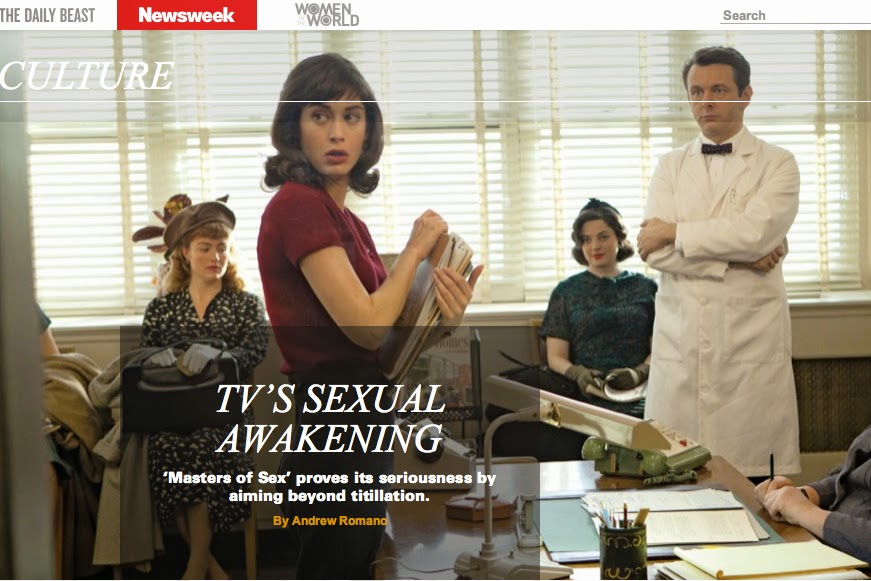

4. Sense of roots and lasting legacy. The wrapping of JFK’s legacy in the British myth of Camelot sprang from Jacqueline Kennedy’s memories of her slain husband listening to recordings of the Broadway show based on the tales of King Arthur and his Knights of the Round Table. “I always keep thinking of Camelot—which is overly sentimental—but I know I am right—for one brief shining moment there was Camelot—and it will never be that way again,” she wrote Harold Macmillan in January 1964. When Randolph Churchill gave John F. Kennedy Jr., the fallen president’s son, a collection of Winston’s books -- (as an author, Winston Churchill built his reputation writing large impressive biographies about his father and the Duke of Marlborough, a descendant ancestor and British war hero) -- Jackie framed her response in terms of legacy. “Winston Churchill and Randolph outlived Jack—but maybe Randolph will be the one to draw John to the books that shaped John’s father,” she wrote.
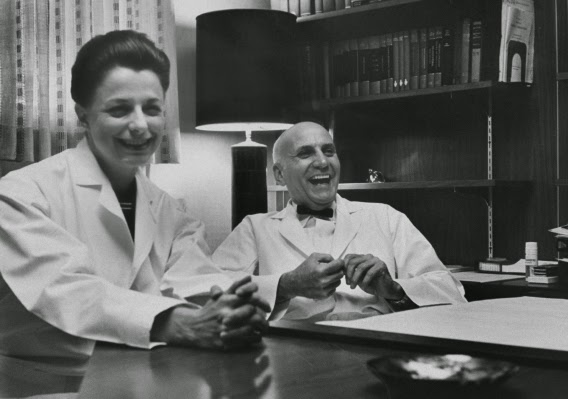

5. Marry well and listen to your spouse’s advice. Spouses in the Kennedy and Churchill political families faced many challenges but also provided great strength for those in the limelight. “Rose Kennedy is an uncanonized saint in a Dior dress,” observed press baron Lord Beaverbrook, Winston’s longtime friend, to JFK’s father, Ambassador Joseph P. Kennedy. Clementine Churchill bolstered her husband Winston’s spirits during the most difficult times of his career. “Never forget that when History looks back, your vision & your piercing energy, coupled with your patience & magnanimity, will all be part of your greatness, “ Clemmie reminded him after some discouraging setbacks during World War II. Both women -- and especially JFK’s wife, First Lady Jacqueline Kennedy -- played a crucial behind-the-scenes role in helping to shape these dynasties.


6. Determination to be great can decide destiny and good fortune. Despite their friendly public faces, both Winston Churchill and JFK had iron wills unwilling to accept failure, with an overriding belief in their personal success. “Remember I’ve always said he’s a child of fate, and if he fell in a puddle of mud in a white suit he’d come up ready for a Newport ball,” Joe Kennedy explained to Jackie Kennedy about her husband.  “We are all worms,” Winston confided early in his career. “But I do believe that I am a glow worm.” Both family patriarchs would will their names into the history books.


7. Use wit to overcome difficulties on the road to greatness. Young Jack Kennedy admired Churchill’s eloquence and pluck in describing war, the joie de vivre of a man who, after nearly being killed by gunfire, could declare with glee, “Nothing in life is so exhilarating as to be shot at without result.” Churchill would remain a touchstone in the Kennedys’ lives. In a lighthearted letter to his family, Jack later compared his mother, Rose, jokingly to the British prime minister, referring to one of his famous lines: “Never in history have so many owed so much to such a one—or is that quite correct?” he teased her. “If you would look in that little book of yours under Churchill Winston—I imagine you can check it.”  It was that charm that would endear JFK to generations of Americans and the wit that, to this day, Churchill is remembered for.


8. Demand only the best from colleagues. JFK surrounded himself with what would later be called, “The Best and the Brightest,” drawing his advisors from the top minds of American industry and from the most elite schools. But he relied on his brother, Attorney General Robert Kennedy, for the best advice on the most sensitive matters such the Cuban missile crisis.  During World War II, Churchill was so grateful to Lord Beaverbrook, he dubbed him “Lord Spitfire” for his extraordinary plane production against the attacking Nazis. Beaverbrook responded with a sense of history that undoubtedly the prime minister appreciated. “You will be talked of even more widely after you are dead than during your lifetime,” Beaverbrook wrote prophetically. “But I am talked of while I live, and save for my association with you, I will be forgotten thereafter.”


9. Be confident but act humbly. Jack Kennedy began his successful 1960 presidential quest after conceding defeat graciously with his longshot bid for the 1956 vice-presidential nomination. His televised concession speech left a good impression. When Churchill received the 1953 Nobel Prize In Literature (rather than Peace), he dispatched his wife Clementine to pick up the award, along with a charming message of acceptance. “I do hope you are right,” he informed the Nobel Committee about the merits of its decision. “I feel we are both running a considerable risk and that I do not deserve it. But I shall have no misgivings if you have none.”


10. Recognize “greatness” in your followers and give voice to it. Famously, President Kennedy’s stirring 1960 inaugural speech—an idealistic plea for all Americans to “ask not what your country can do for you, ask what you can do for your county”—reverberated with Churchill’s cadences. For inspiration, Kennedy had listened to recordings of Churchill during World War II.  “It was the nation and the race dwelling all around the globe that had the lion’s heart,” Churchill  later wrote of the British people during the war. “I had the luck to be called upon to give the roar.”

In my book “When Lions Roar”, I mentioned the word “leadership” twelve times within the text. But its meaning  is best understood for everyone by reflecting upon the words, actions and inspiring careers of these two great men, Winston Churchill and JFK.

Bravo Announces "ALL THAT GLITTERS" Being Developed by Sony, Based On Award-Winning "Newhouse" Biography; Exec Produced by "Walking Dead" Gale Anne Hurd and "Masters of Sex" Judith Verno

$
0
0

The award-winning "Newhouse" book is now becoming "ALL THAT GLITTERS" on Bravo, produced by Sony and Universal. It's being exec produced by Gale Anne Hurd of "The Walking Dead" and Judith Verno of Sony's "Masters of Sex." I'm the author and a producer of this new project and very grateful to my friends at Sony.

Here's the story from Variety:
Bravo is pumping up its slate of scripted originals, and a key ingredient in the expansion will be a 1980s period drama from “Walking Dead” producer Gale Anne Hurd, Variety reports.

Hurd’s Valhalla Entertainment and Judith Verno’s Peace Out Productions are behind “All That Glitters,” which is being developed as a miniseries, the story reports.
“Based on Thomas Maier’s book ‘Newhouse: All The Glitter, Power and Glory of America’s Richest Media Empire and the Secretive Man Behind It,’ the project is set at the heyday of the magazine business in the 1980s when editors including Vogue’s Anna Wintour and Vanity Fair’s Tina Brown were ruthless in their competition to dominate the publishing world,” Variety reports.
"NEWHOUSE: All the Glitter, Power and Glory of America's Richest Media Empire and the Secretive Man Behind It," (St. Martin's Press, 1994) won the Frank Luther Mott Award by the National Honor Society in Journalism and Mass Communication as best media book of the year. Excerpts appeared in the Columbia Journalism Review, Worth, and The London Telegraph magazine. An updated trade paperback of "Newhouse," published by Johnson Books, was picked by Entertainment Weekly as one of the top ten "must reads" for the 1997 summer season.
Anna Wintour and Tina Brown in 1989
Viewing all 297 articles
Browse latest View live


Latest Images